


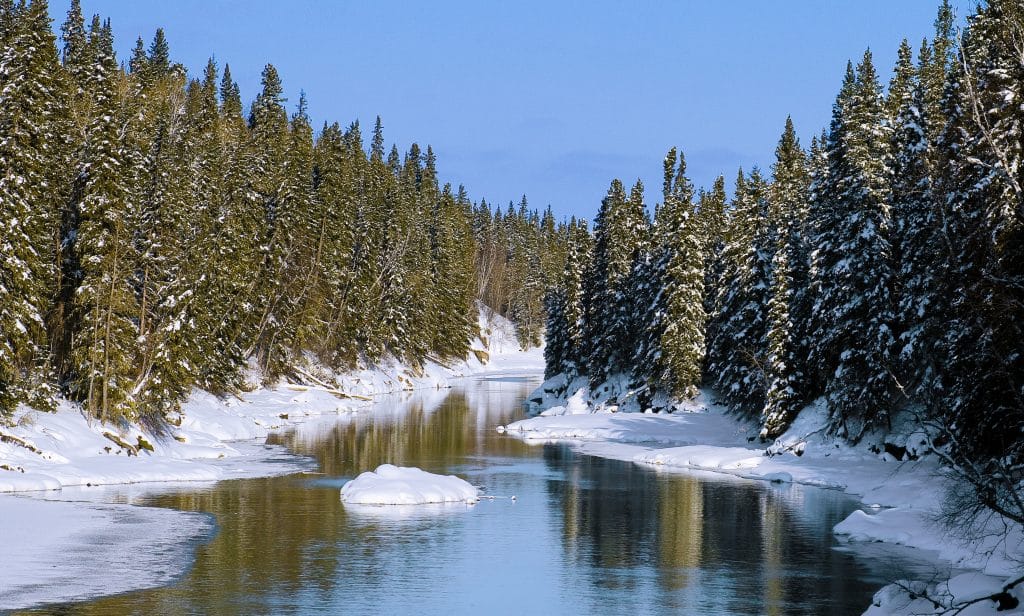
Manitoba’s grade increased the most significantly of any jurisdiction
LEADERS, LEARNERS AND LAGGARDS LINEUP
CONSERVATION REPORT CARDS FOR CANADA ARE OUT
(SPOILER) FOUR PROVINCES ARE FAILING
March 18, 2025 – The Canadian Parks and Wilderness Society (CPAWS, Canada’s only charity dedicated to the protection of public land, freshwater and ocean) is taking the Government of Canada and Canadian provinces and territories to school! Their just-published report ON THE PATH TO 2030: A Report Card on Progress to Protect Land and Ocean Across Canada is shedding light on which provinces and territories are sitting at the head of the class, which need improvement, and who needs to sign up for summer school…
**NOTE: In the weeks since we finished writing the report, we’ve been really pleased to see Manitoba and Canada sign an MOU for a Nature Agreement. Also, the feasibility study for the Seal River Watershed is now complete. This study has concluded that establishing a protected area in the Seal River Watershed is feasible.**
“We are encouraged by this momentum and are keen to continue supporting this important work. This is the type of action that puts Manitoba on the right path to achieving its conservation commitments, and possibly an improved mark on the next report card, said Ron Thiessen, CPAWS Manitoba’s Executive Director.
Please refer to this as a report by the Canadian Parks and Wilderness Society (CPAWS) in all media mentions.
1. Report Card Comments (2022 – 2025)
GOVERNMENT OF CANADA:
a) Terrestrial Conservation (LEADER) B+
“Canada shows great enthusiasm for expanding protected areas but sometimes forgets to budget for their projects past the first phase. Canada, if you want full marks, you need to make sure your conservation efforts come with long-term funding, not just big announcements!”
b) Ocean Conservation (LEADER) B+
“Canada has made great strides in ocean conservation, protecting over 15% of Canada’s ocean — but just like a kid who forgets to proofread their essay, there are a few too many loopholes in some of these Marine Protected Areas (MPAs.) Next year, let’s work on closing those gaps so marine protection really mean something!”
See comprehensive report card below…
CANADIAN PROVINCES:
Manitoba (LEARNING) B-
“Manitoba has so much potential, and when it applies itself, we see amazing work — like its leadership in conservation commitments and protecting forests and wetlands. But then, halfway through the semester, it seems to get distracted and forgets about the whole ‘conservation funding’ thing. If Manitoba wants to graduate with honours, it needs to stay focused and finish what it starts!”
Ontario (FAIL) F:
“Needs an attitude adjustment. We strongly suggest ‘summer school’ so Ontario can get a firm grasp of the basics. Key summer homework should include intensive lessons on habitat protection and reconciliation.”
Alberta (FAIL) D-
“Alberta has potential but lacks focus and may be held back a grade if it doesn’t apply itself. Coal policies have been inconsistent, with bans being lifted and then partially reinstated due to public pressure and then lifted again. The province lacks a clear, long-term commitment to protecting critical landscapes from coal mining and other environmental threats. Encouragement and guidance could help Alberta redirect its energy toward meaningful conservation.”
British Columbia (LEARNING) B
“B.C. turned in a conservation project with a stunning cover and fancy fonts, but when we flipped through, we realized half the pages were blank. There’s a lot of potential here — especially with Indigenous-led conservation. Needs to focus less on promises and more on actually handing in the final draft.”
Saskatchewan (FAIL) D-
“Saskatchewan has been sitting in the back row of conservation class, occasionally nodding along but not actually turning in any assignments. Reconciliation, grasslands, wetlands, species at risk, habitat protection — it’s all still waiting for meaningful attention. Next year, let’s move up to the front and start seeing results!”
Quebec (LEADER) A-
“Wonderful! With consistent effort, Quebec will remain a top performer in conservation. Let’s keep up the momentum! Quebec is a leader and role model in conservation, with a strong commitment to public participation. It needs to upkeep conservation funding despite budgetary constraints.”
Nova Scotia (LEADER) B+
“Nova Scotia has been one of the most engaged provinces, often raising its hand to announce another protected area. With 62 new sites added, it’s clear that NS worked hard on its assignments — but there’s still a stack of overdue work from 2013 sitting on the teacher’s desk. Let’s tackle that backlog before signing up for extra credit!”
New Brunswick (LEARNING) B:
“New Brunswick came into 2024 full of energy, doubled its protected areas, and really made a stellar effort! But much like a student who gets an A+ in science but forgets their English homework, NB still needs to work on Indigenous partnerships and protecting coastal zones. Keep up the great work, just don’t leave other assignments unfinished!”
Newfoundland and Labrador (FAIL) D-
“Newfoundland and Labrador loves making plans but doesn’t always follow through. We appreciate the enthusiasm for projects like the South Coast Fjords NMCA, but let’s see some strong results next year!”
Yukon (LEARNING) B-
“While the Yukon lags behind some of its peers, the territory has great potential to become a conservation leader in Canada. A key area to improve is offering consistent support for Indigenous-led conservation and working in partnership with First Nations on land use planning.”
Northwest Territories (LEADER) B+
“NWT was one of the best group project leaders this year, teaming up with Indigenous Nations to create massive conservation gains. However, they still have some overdue paperwork (land use planning and legislation). Let’s aim for 100% completion next year!”
2. SPOTLIGHT: GOVERNMENT OF CANADA
a) Federal Terrestrial Conservation B+
Leadership and Initiative
- Takes on a leadership role in conservation efforts, setting ambitious goals like 30×30 and making international biodiversity commitments.
- Sometimes overcommits and struggles to balance all responsibilities, like a student who signs up for every club and then realizes they have no time for homework.
Budget Management
- Great work on conservation funding, supporting Nature Agreements and Indigenous-led initiatives! Forgets that funding needs to be long-term — plans currently run out after 2026, which is like bringing lunch money for Monday but forgetting about the rest of the week.
Time Management and Deadlines
- Good at setting deadlines but frequently requests extensions (like funding for national park establishment.)
- Making steady progress toward 30×30 but must avoid cramming conservation efforts in the final years before 2030.
Attention to Detail
- Some conservation plans look great on paper but lack proper implementation (e.g., protected areas that still allow industrial activity).
- Needs to complete projects and fix loopholes instead of just launching new initiatives.
Needs Assistance:
- Long-term funding is still uncertain — needs to secure sustained investment beyond 2026.
- Time management needs improvement — many conservation projects remain unfinished.
- Needs to finalize and enforce conservation protections rather than just announcing them.
b) Federal Ocean Conservation B+
Leadership and Initiative
- Strong leadership in expanding Marine Protected Areas (MPAs) and working towards the 30×30 goal.
- Significant improvements in Indigenous-led marine conservation and co-governance.
- Needs to prioritize stronger protection standards rather than just expanding marine areas.
Budget Management
- Funding has helped expand Marine Protected Areas (MPAs) but remains inconsistent for long-term enforcement.
- Needs to secure stable funding for marine conservation beyond short-term project cycles.
Group Project Participation
- Works effectively with Indigenous partners, international conservation groups, and industry stakeholders.
- Needs to improve transparency in marine conservation policies.
- Should ensure Indigenous-led marine projects receive equal recognition and funding.
Needs Assistance:
- Some Marine Protected Areas (MPAs) still allow industrial activity — needs stronger enforcement policies.
- Funding gaps exist for long-term marine conservation efforts.
- Needs to finalize protections for older MPAs and ensure they meet high standards.
“There’s never been a more important time for Governments, organizations and all Canadians to support conservation efforts across the country. With constant breaking news across North America, it’s easy for all stakeholders to get lost in the woods and drift from the important conservation work they have started. There’s nothing quite as fundamental to the Canadian identity as nature, and long-term funding is essential to make it happen.”
The full CPAWS report with many more Government of Canada and Provincial Conservation Report Card insights for Ontario, Alberta, British Columbia, Manitoba, Quebec, Saskatchewan, Nova Scotia, New Brunswick, Prince Edward Island, Newfoundland and Labrador, Yukon, Nunavut, and Northwest Territories can be downloaded at: CPAWS Report Card 2025
The following is a list of active CPAWS Spokespersons on the National and regional levels:
To arrange an interview with any spokesperson, please contact:
CPAWS Manitoba
Ron Thiessen. Executive Director
ron@cpawsmb.org
(204) 794 4971
Patrick McCaully
Pointman News Creation
Patrick@pointmannc.com
Jennifer Brown, National Associate Director, Communications
CPAWS (National)
jbrown@cpaws.org
416-389-6668
Taylor Creaser, Conservation Campaigner
CPAWS Nova Scotia
tcreaser@cpaws.org
(902) 333-8968,
Max Winkelman, Communications Manager
CPAWS British Columbia
max@cpawsbc.org
604-685-7445 x 3
Charlène Daubenfeld, Communications Director
SNAP Québec
communications@snapquebec.org
514-378-3880
CPAWS Northern Alberta
Tara Russell, Program Director
trussell@cpaws.org
(778) 240-4360
CPAWS Southern Alberta
Kat Graves, Communications Manager
kgraves@cpaws.org
(403) 305-2015
Julia Clarke, Communications and Outreach Coordinator
CPAWS Ottawa Valley
ov-outreach@cpaws.org
(819) 918-0705
– 30 –
About CPAWS
The Canadian Parks and Wilderness Society (CPAWS) is Canada’s only charity dedicated to the protection of public land, freshwater and ocean with a strong national and regional presence across the country. Working in a way that respects the sovereignty and leadership of Indigenous nations, we are focused on conserving nature to respond to the dual crises of accelerated biodiversity loss and climate change. Our vision is that at least half of land, freshwater and ocean in Canada is permanently protected to sustain nature and people for current and future generations. For more information about CPAWS and the work we do to safeguard Canada’s natural heritage, visit cpaws.org. Join our community on Bluesky, Facebook, Twitter, Instagram and LinkedIn. Donate today. Take action.