
August 7, 2025
Gotta Cache ’em All
By Brendan, Social Media Assistant.
Fan of Pokemon Go? Love trying to cache them all? Then you’ll love geocaching!
Geocaching is a world-wide exploration game that combines exploring nature, finding secret items, and helping you appreciate your surroundings. In geocaching, you look for hidden containers called geocaches along trails, in the wilderness, and around your neighbourhood.
Geocaches are containers hidden in nature that you find from a set of coordinates. You’ll get within 9 metres of the geocache by using your phone or a GPS and then it’s up to you to find it! Geocaching is basically a worldwide scavenger hunt. The hobby has been around for years and in 2020, nearly 4000 Manitobans found at least one geocache. It’s a great time to start, as 2025 marks the 25th year of geocaching! The community is celebrating with new hiding themes, worldwide events, and even a geocaching film festival.
What you’ll need to geocache:
- A phone or GPS (good for geocaching without cellphone service)
- An app for geocaching. The Geocaching app is fantastic, and TurfHunt works great for geocaching in places with no cellphone service.
- Comfy clothes and shoes
- Curiosity and adventure!
- A pen
- A buddy: geocaching can take you to new locations, use the buddy system to stay safe and find the geocache before them for bragging rights.
Instructions:
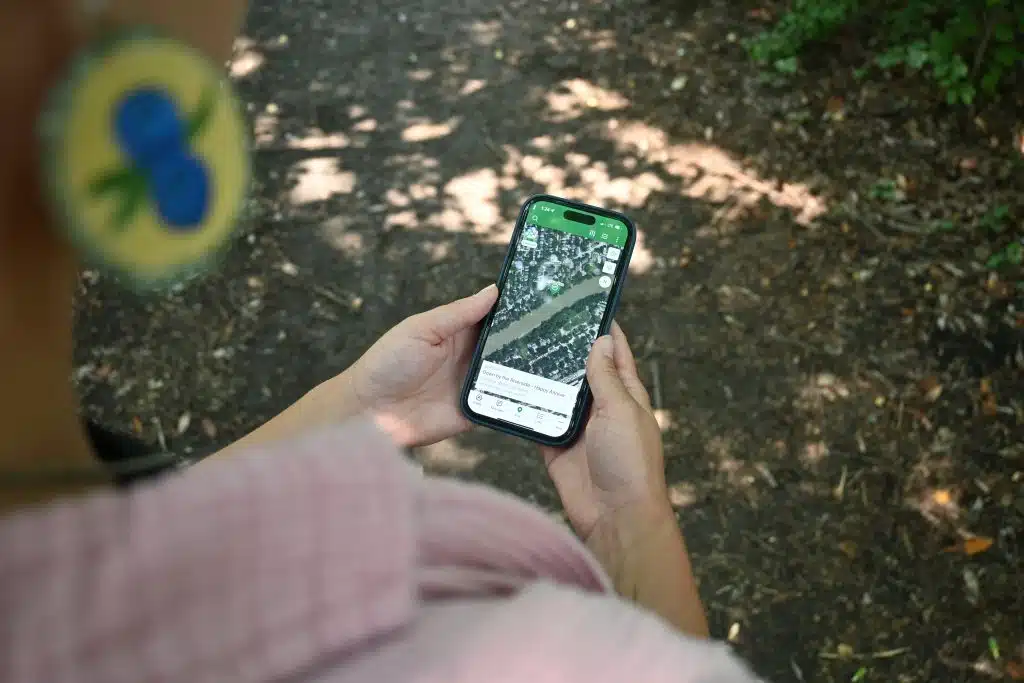
1. Download the Geocaching app and create a free account.
2. Explore! There may be geocaches in your neighbourhood, but going somewhere like the Assiniboine Forest Trails or one of Manitoba’s parks may have more for you to find! You can check how many geocaches are in the park, trail, or area you plan to visit by using the app.
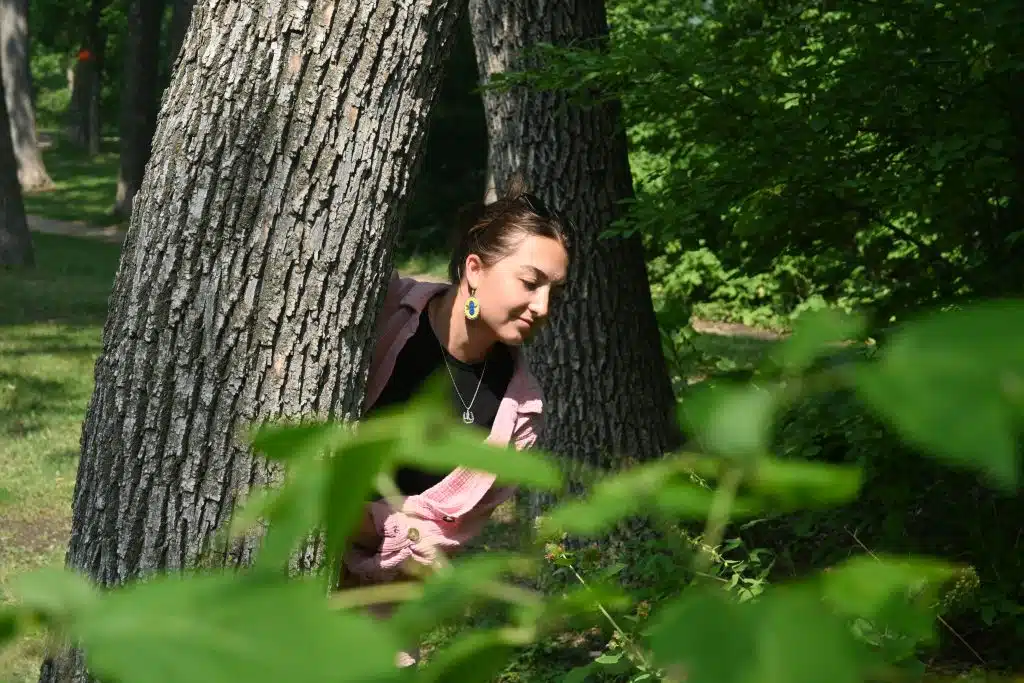
3. Navigate yourself to the geocache using the app.
4. Explore the land to find it! Look for small containers that have a lid; like food containers, pill bottles, mason jars, etc. (sometimes they are hidden in containers that blend into nature like trees, pinecones, and mushrooms).
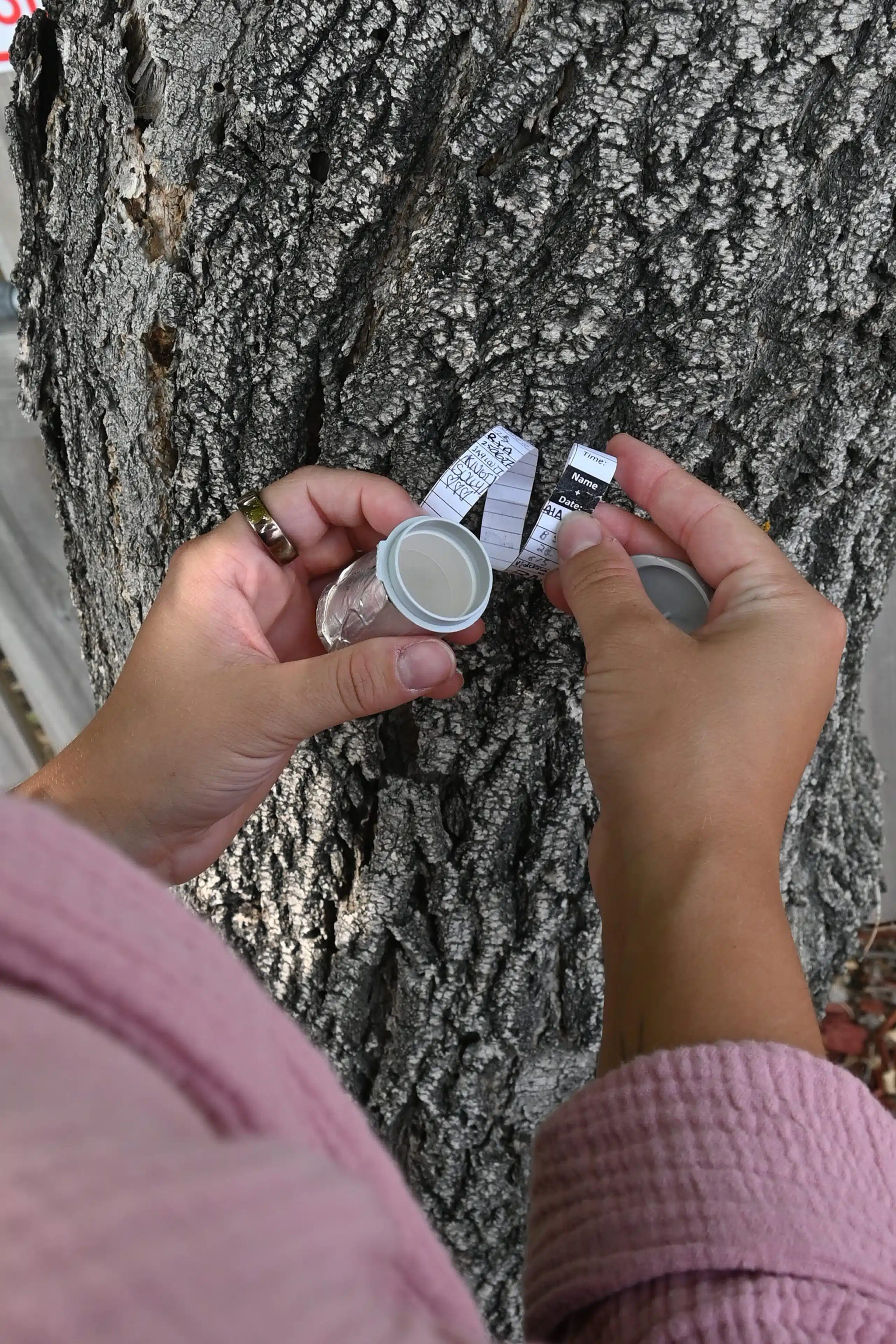
5. Add your name in the geocache log once you’ve found it! There may also be small items in the geocache, only take an item if you have something to exchange.
6. Remember to put it back the way you found it! There aren’t too many rules of geocaching, but the biggest one is: Leave the area how you found it.
Identifying a Cache
- Geocaches are water-proof containers and must be smaller than 30cm x 30cm x 15cm to be hidden in Manitoba parks.
- Caches have a difficulty rating (based on puzzle and terrain) based on the amount of stars it has on the app.
- There are many different types of caches including: traditional, mystery, and earthcache. Explore all the types of caches.
Geocaching Etiquette
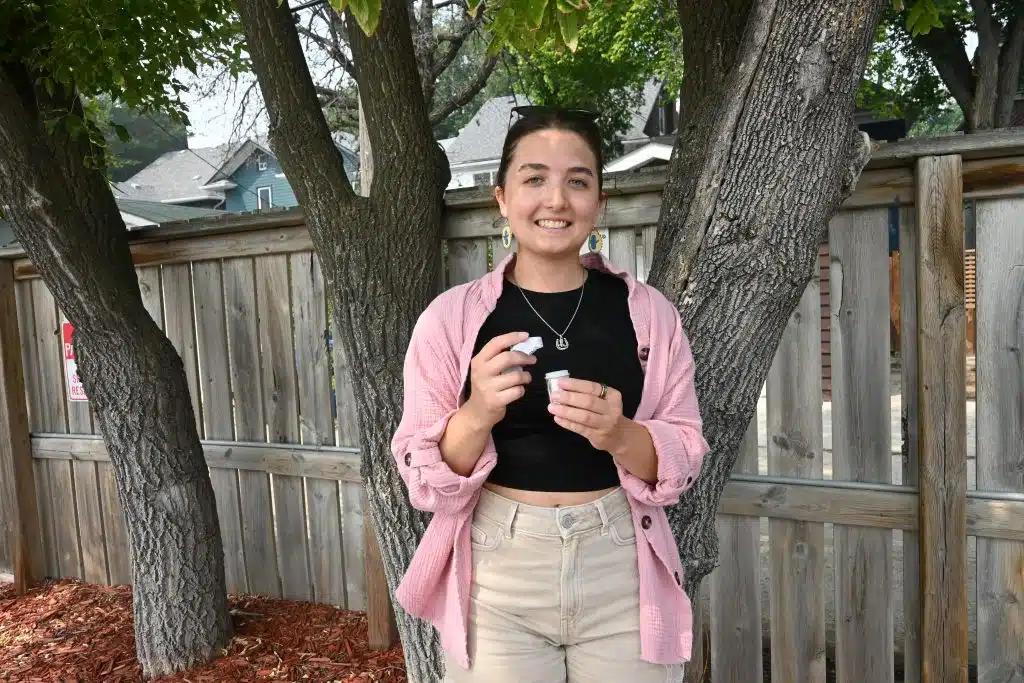
- Avoid tipping off others to the location, carefully remove the cache and then move away to examine its contents.
- Check out the swag inside the cache and sign the logbook.
- If you take an item out, replace it with a new item of equal or higher value.
- If the item you take is a “trackable” then you also have an obligation to move that item to a new cache.
- Carefully seal the cache and hide it exactly as you found it. Don’t try to make it easier or harder for the next person to find.
Making your own Geocache:
- Hiding a geocache in a provincial park in Manitoba is easy, just ensure you follow the province’s guidelines and fill out the application form.
- Hiding a geocache in a park without permission from the government will result in your container being removed.
Apps:
- Geocaching app (Apple/Google Play)
- TurfHunt app (Apple/Google Play)
Additional Resources:
Learn more from Geocaching 101
Learn more on our blog from 2021: Get Outside and Get Geocaching
Join a Facebook group to learn more about caching in Manitoba:
Watch this video from Liz Murdock, FRCN Conservation Areas Initiative Project Manager.