
November 21, 2025
The Path to Designating a National Marine Conservation Area
By Claire, Conservation Campaign Manager
With the announcement of the province’s Path to Net Zero last month and the Speech from the Throne this week, Churchill and Manitoba’s ocean is getting a lot of attention. Manitoba has committed to partnering with the federal government and help fund a feasibility study on a National Marine Conservation Area in Western Hudson Bay.
You may also be curious about the recent attention on enhancing Churchill’s port and increased shipping and what this means for nature, culture, and the local tourism economy.
What exactly is a National Marine Conservation Area and why is it important in Hudson Bay? Where are we at in the process? What is a “feasibility study” anyway? In this week’s blog we tackle those questions and more.
What is an NMCA?
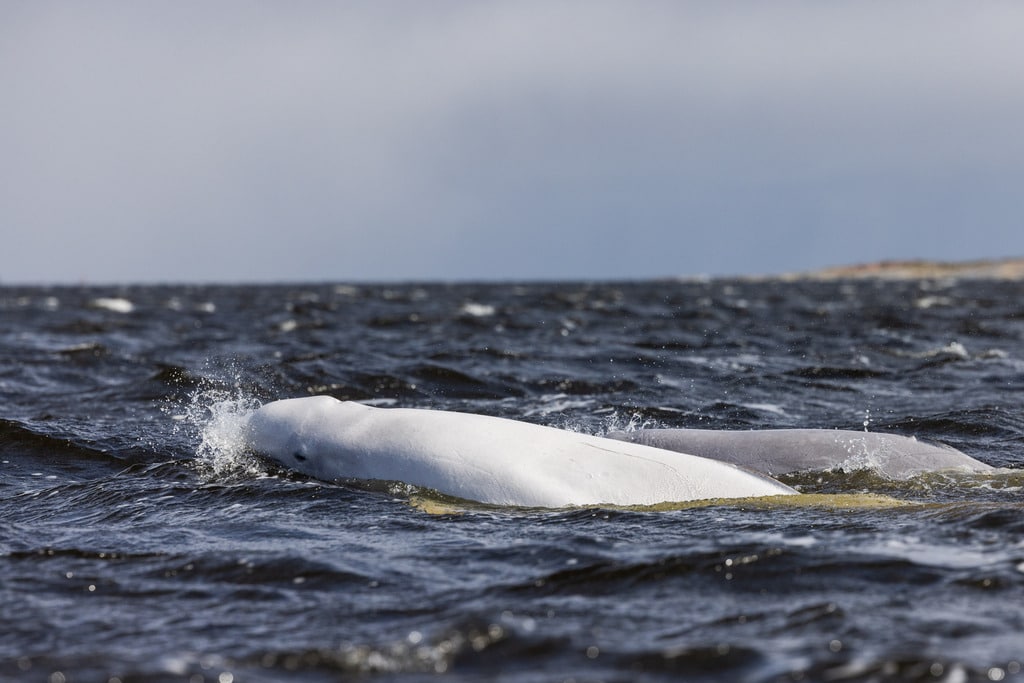
A National Marine Conservation Area, or “NMCA” for short, is a protected region in the ocean and along coastlines, dedicated to safeguarding marine environments. You can think of it like a park for the ocean. Like a national park, provincial park or eco-reserve, there’s different things you can and can’t do in an NMCA. These rules are co-developed with the community or communities championing the area and are customized for the wildlife and people who live there.
Typically, a National Marine Conservation Area has zones for different uses to make sure that animals and their habitat are protected. For example, one zone could be for recreational fishing or boating, another could be for scientific research, another for shipping traffic. In the shipping zone there also could be speed limits and rules about idling engines. This would be really important in Western Hudson Bay because of the sensitivity of its underwater animals to ocean noise.
Now is the right time to protect the waters of Hudson Bay that are full of life as local and national interest is on Churchill’s port and trade revitalization.
Learn more about why Western Hudson Bay needs to be protected here.
Where are We Now?
Creating a new National Marine Conservation Area typically follows this 5 step process.
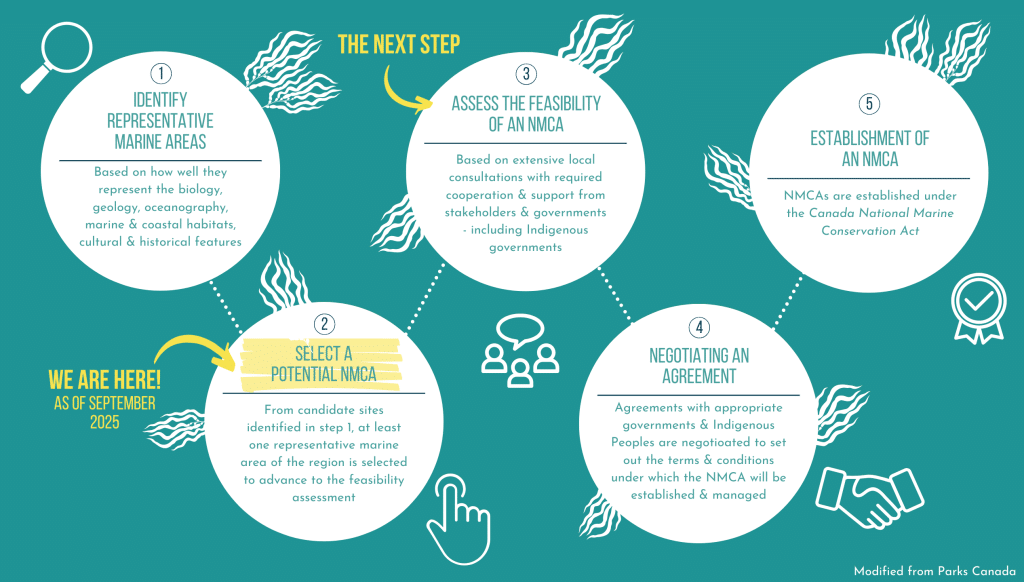
Western Hudson Bay was chosen by Parks Canada to be a potential National Marine Conservation Area location because of its special arctic and subarctic ecosystem, home of iconic polar bears and beluga whales, and its location near to other community-led conservation happening on land along the coast and upstream. If local communities are interested or curious about what an NMCA could do or mean, they then move onto a feasibility study.
The town of Churchill is Manitoba’s tourism jewel and smack dab in the heart of Western Hudson Bay. With connections to key industries such as tourism and shipping, and strong community ties to nearby First Nations and Inuit communities. The Churchill Mayor and council has stated its support for the feasibility assessment and is well suited to help lead this process.
What is a Feasibility Study?
A feasibility study is an exploration of how practical it would be to do a certain project. For example if you were exploring the feasibility of adding a new traffic light to a four-way intersection, you might explore the cost of the materials, how easy it would be to install the new traffic light, how receptive the community is to a change in the road, what the benefits would be and what the possible drawbacks could be. A final study report would recommend whether or not the project should go ahead. Feasibility studies are done in all kinds of industries and for all kinds of projects.
When it comes to conservation, feasibility studies are crucial for figuring out if a new protected area is wanted by the community, what the key important areas or features to protect are, and how a conserved area could be governed and managed in the future.
What a feasibility study for a National Marine Conservation Area will look like in Western Hudson Bay is still to be decided, but we can look to a nearby NMCA for an example.
The Mushkegowuk Council (or Swampy Cree of James Bay) recently completed their feasibility study, Tawich is Where I Belong exploring a National Marine Conservation Area in James Bay. This study explored the importance of the region to First Nations, the wildlife and ecosystem of the area, possible boundaries, and socio-economic considerations. The Tawich study included 124 interviews with land users as well as community meetings and meetings with local leadership. This community engagement is an important part of any feasibility study.
An exploration of an NMCA here in Manitoba would also include meetings with regional communities to make sure the vision and reality of the marine protected area is locally designed, made, and operated by the people who live in the region.
There are 5 National Marine Conservation Areas in Canada at different stages of the NMCA process, including in Ontario, Quebec, Nunavut and B.C. Gwaii Haanas off the west coast of British Columbia, is part of award winning tourism in the region and protects the habitat of at least twenty species of dolphins and whales. Quebec’s Saguenay-St. Lawrence Marine Park provides local jobs in stewardship and tourism while protecting sensitive underwater life. (Learn more about this amazing ecosystem and how you can help it by visiting our friends at SNAP Quebec.)
Why Now?
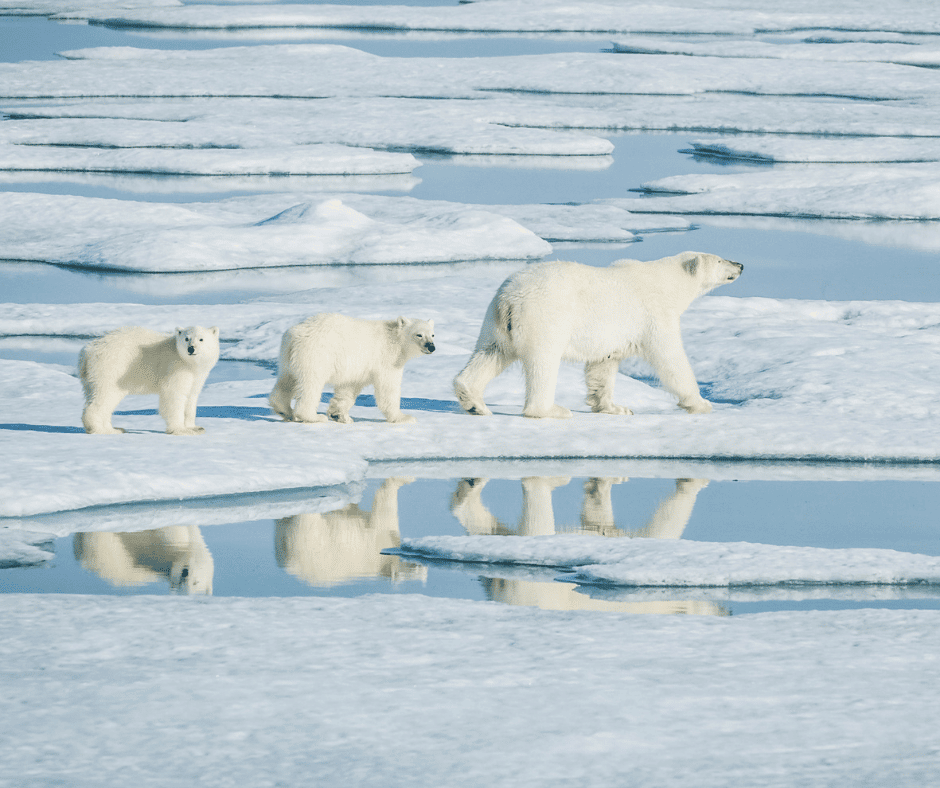
Western Hudson Bay is internationally known and celebrated as one of the best places in the world to see polar bears, beluga whales, and birds, and experience thriving northern Indigenous cultures. These treasures drive Churchill’s tourism economy and contribute to Canada’s global reputation as a nature travel destination.
At the same time, major change is on the horizon. More boats on the bay is a future coming closer every day as “Churchill Port Plus” is on the short list for nation building projects under the federal government’s new Build Canada Act. This could include updates to Churchill’s port and rail line, potentially making an all-weather road or even an LNG terminal, bringing new opportunities for economic growth but also ocean noise, the potential for boat and animal collisions, and pollution.
The challenge is clear: how do we pursue increased port and shipping activities while ensuring that it doesn’t come at the expense of the whales, the bears, the birds, and the cultures and livelihoods tied to them?
We have to make sure that protecting nature is a top priority when enhancing the port activities and not left as an afterthought.
A National Marine Conservation Area would help ensure that this key underwater home stays protected for Hudson Bay’s wild creatures and for the people that rely on them.
How Can I Help?
The feasibility study has yet to begin and no start date has been chosen. To move forward, it’s critical that letters of support be sent to both the federal and provincial governments, expressing your support for launching a feasibility study for the National Marine Conservation Area.
Help beluga whales by using our easy letter writing tool.
Together, we can work to protect this region, balancing conservation and culture with sustainable economic activity.
—
About CPAWS
CPAWS has been a national leader in marine protection for over 20 years. We work alongside Indigenous partners and local communities to advocate for stronger, better-connected marine protected areas that respect cultural values and protect ecosystems.
Learn more about our national ocean protection work here.
About Western Hudson Bay
Western Hudson Bay is a crucial wildlife habitat, home to large populations of polar bears, beluga whales, and birds. CPAWS Manitoba is advocating for a National Marine Conservation Area (NMCA) in the region to protect these species and their environment, while securing cherished regional cultures, ways of life for Indigenous peoples, and opportunities for sustainable livelihoods. NMCAs limit harmful activities like deep sea drilling and trawling, while allowing things like sustainable tourism and fishing. Establishing an NMCA in Hudson Bay would safeguard wildlife, protect local ways of life and promote long-term economic opportunities.
Learn more here.
This blog was made possible through the generous support of the National Audubon Society. We’re grateful for their partnership, collaboration, and shared commitment to protecting the lands, waters, and wildlife we all cherish.