
April 17, 2026
Across northern Manitoba, one of the last great natural landscapes on Earth still flows freely.
Right now, there is a rare opportunity to keep it that way.
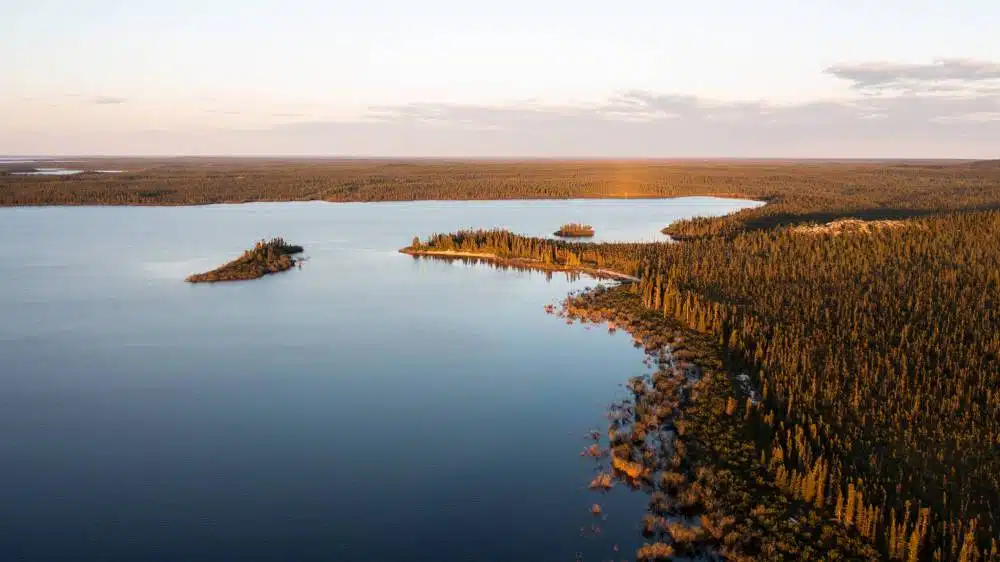
The Seal River Watershed spans more than 50,000 square kilometres of intact rivers, wetlands, and tundra flowing into Hudson Bay. It is a place where wildlife thrives, waters remain clean, and cultures and traditions continue.
Led by four First Nations, and supported by CPAWS and many others, this proposal would protect this remarkable region through a network of protected areas. It is a vision grounded in Indigenous leadership, shared stewardship, and long-term care for the land.
This is what conservation looks like at its best.
Take the survey now and share your support!
When large landscapes are conserved, the benefits ripple outward, wildlife habitats remain intact, water stays clean, carbon is stored, and people can continue to connect with nature through paddling, learning, and licensed hunting and fishing.
Conserving and restoring nature is vital to combat climate change, protect biodiversity and species at risk, and support a strong, sustainable economy. We all depend on nature for clean water, breathable air, and a livable climate.
And this opportunity can’t last forever.
A Globally Significant Place
The Seal River Watershed is one of the largest intact watersheds left on the planet. Few places remain where ecosystems function at this scale, largely undisturbed.
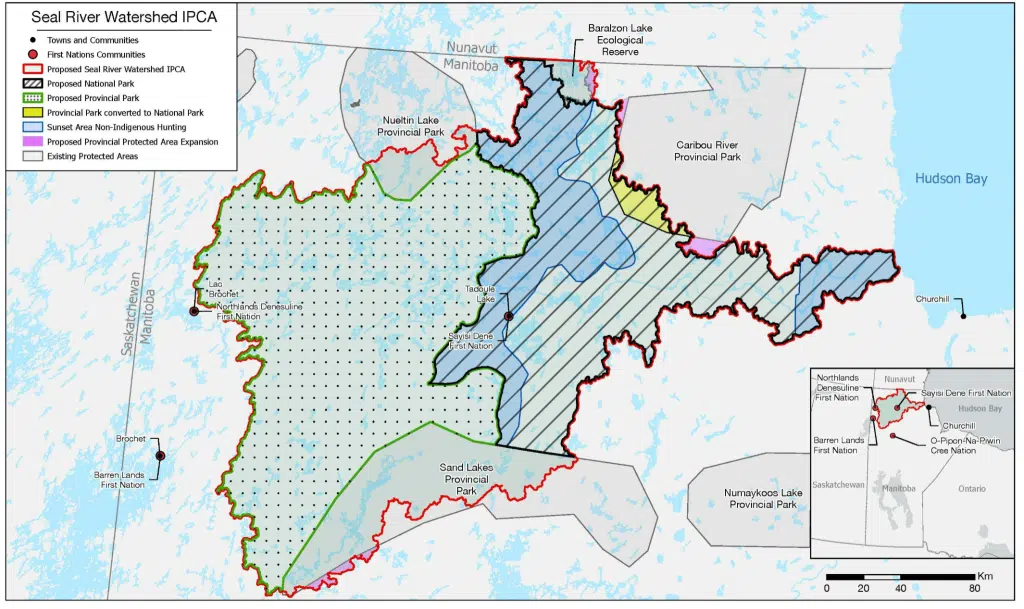
The proposal put forward by the Seal River Watershed Alliance, alongside the governments of Manitoba and Canada, would create layers of protection. This Indigenous Protected Area would work alongside provincial and national park designations, ensuring the land is cared for using a combination of knowledge systems, tools, and resources.
It is also a vision that welcomes people, ensuring the watershed remains accessible for future generations.That means opportunities for recreation, cultural learning, and sustainable economic activity, all guided by respect for the land.
“Places like the Seal River watershed are increasingly rare. Protecting them is an investment in our shared future, for wildlife, for climate stability, and for generations to come,”
Ron Thiessen, Executive Director for CPAWS Manitoba.
A Spirit of Collaboration
This proposal reflects years of partnership.
Indigenous Nations, governments, and communities have worked together to shape a plan that honours Dene and Cree traditions while creating lasting benefits for all Manitobans and Canadians. Sayisi Dene First Nation and CPAWS Manitoba began the initiative in 2016. We’re honoured to partner with and support the leadership of the Seal River Watershed Alliance First Nations.
The proposal outlines a mosaic approach, combining different types of protected areas to achieve integrated conservation and stewardship. The entire watershed would be recognized as an Indigenous Protected and Conserved Area (IPCA), with two-thirds designated as a new provincial park and the remaining approximately one-third as a national park reserve.
Together, these tools create a strong, lasting foundation for conservation while supporting economic opportunities and access for all. The four First Nations are committed to expanding sustainable tourism and welcoming people to experience the region through hiking, paddling, licensed hunting and fishing, and learning about Dene and Cree cultures.
Shared decision-making of Indigenous and crown governments will help ensure the watershed remains healthy, vibrant, and protected for generations to come.
Take Action
Add your voice to support long-term protection of the Seal River Watershed.
Nature is at a tipping point, but moments like this show what is possible.
Your voice matters. Let’s use it.
Learn More
Visit the Seal River Watershed Alliance.
Learn about the coalition of partners supporting the Seal River Watershed.
Add your voice to support long-term protection of the Seal River Watershed.