
May 30, 2025
Manitoba Animals that are 2SLBGBTQIA+
CPAWS Manitoba Team
Our First Float
2025 is a milestone year for us—we’re thrilled to be joining the Pride Winnipeg Parade with our very first float!
Our theme, “Love is in our Nature,” celebrates the beautiful diversity found not just in people, but in the natural world around us. Did you know that many Manitoba species display same-sex behavior, gender fluidity, and diverse pair bonding? It’s a powerful reminder that love—in all its forms—is truly natural.
While research in this area is still growing, scientists have long observed a wide range of sexual and courtship behaviors in wildlife. From affectionate bonds to mating displays, nature reminds us that diversity is everywhere.
We’re proud to honor that truth and to stand with the 2SLGBTQIA+ community this Pride Month and every month.
Nature’s Rainbow
Love takes many forms in the natural world and science is finally catching up to what animals have known all along. From butterflies to bison, mallards to mollusks, many species in Manitoba exhibit same-sex behavior, gender fluidity, and diverse mating rituals. These creatures remind us that queerness isn’t just human, it’s beautifully natural. Get to know a few of Manitoba’s wildest love stories that break the binary and celebrate diversity in every corner of the ecosystem. Get to know some of the 2SLBGBTQI+ Animals in Manitoba:
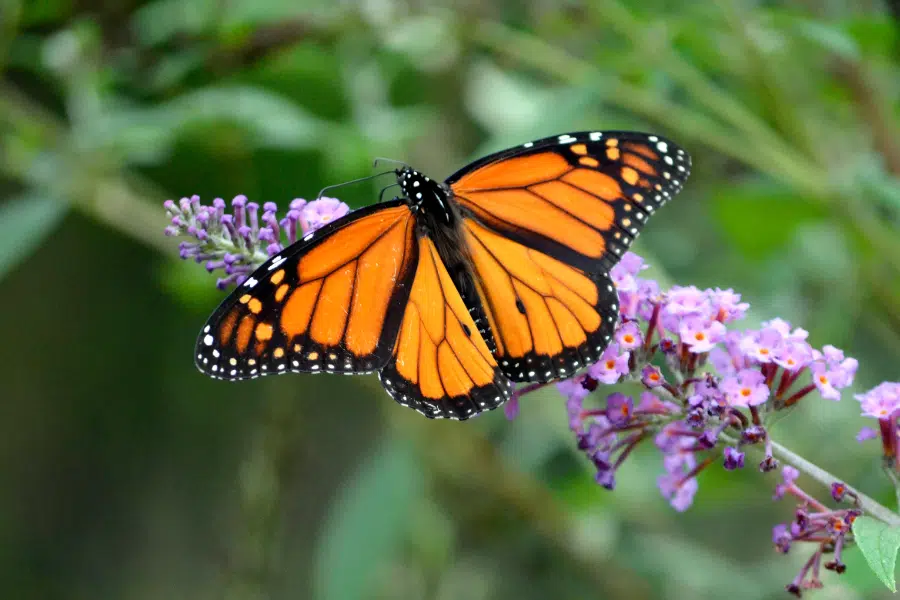
Monarch:
When a female Monarch Butterfly decides to mate they will release pheromones to attract the males. About 33% of sexual interactions are male/male pairings and are of the same length as male/female copulation sessions.
Bison:
Bison relationship courtship is simple, whether it be male/female pairings or male/male pairings. American Bison males will court males almost as much as they court females. Females are not recorded in the wild as showing homosexual behaviour, however in captivity they will mount other females.
Garter Snake:
Male and female garter snakes have been seen creating bonds with the same gender, and they choose their partners carefully.
Snail:
Almost all snail species are intersex, meaning each snail has a male and female reproductive system. When snails engage in sexual reproduction, they can take on the needs of sperm or eggs, depending on their partner.
Dragonfly:
Male homosexuality in dragonfly populations is common in many species. Around 20–80% of the males couple with other males.
Wasp:
Some wasp species are asexual and females will give birth without fertilization.
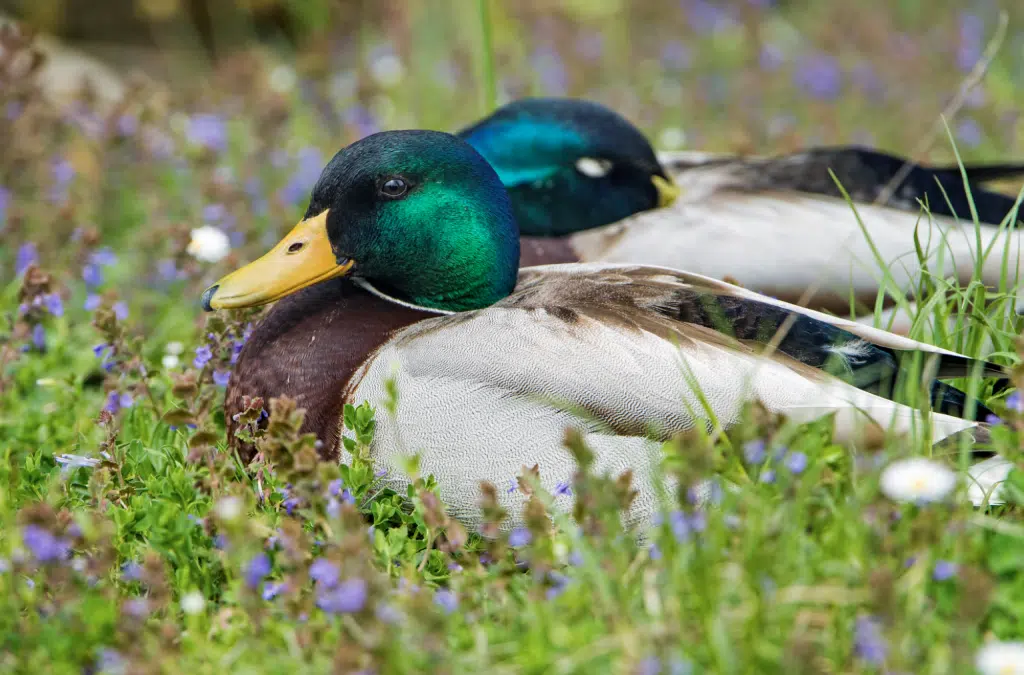
Mallards:
Mallards typically form male-female pairs only until the female lays her eggs. However, male-male sexual activity and bonding are common, with some populations showing up to 19% of all pairings consisting of two males.
Arctic Grayling:
Research going back to the 1950s has shown both male and female graylings exhibiting homosexual behaviour (Bagemihl, pg 665).
Designed with Pride
At CPAWS Manitoba, we believe that love—for nature, for community, and for each other—is something to be celebrated. That’s why we’re so proud to share our “Love is in our Nature” design, a heartfelt creation rooted in local talent, meaningful research, and a commitment to inclusivity.
This unique design was hand-drawn by our very own Education Ambassador, Kate Heide. Inspired by her research and experiences from our past education event “Queering Outdoors,” Kate brought her vision to life with illustrations that reflect the beautiful diversity found both in nature and in our communities. Her artwork highlights the connections between environmental stewardship and 2SLGBTQI+ inclusion.
Love, Community, and Conservation
At CPAWS Manitoba, we believe that love, in all its forms, is a force for connection, resilience, and joy. That’s why we’re so excited to join the Pride Winnipeg Parade for the first time this year with our “Love is in our Nature” float. Our participation is more than a celebration—it’s a reflection of who we are and what we stand for. Just as nature thrives in diversity, so do our communities. We’re proud to stand alongside 2SLGBTQIA+ Manitobans, honouring the deep ties between love, identity, and the natural world. Together, let’s celebrate inclusion, uplift one another, and protect the lands and waters that connect us all. Because when we care for each other and for nature, we all thrive.
Want to Learn More?
Explore the science, the stories and the celebration behind it all.
Learn more about Pride Winnipeg
Sources
Bruce Bagemihl. Biological Exuberance: Animal Homosexuality and Natural Diversity. 1999. St. Martin’s Press.
Cao Tien Quan, Quynh Luu, Nghe An Vietnam. “Can the animals know that their mates are lesbian or gay?” The Guardian. https://www.theguardian.com
ETH Zürich. “What wasps can tell us about sex,” 2011. https://www.sciencedaily.com/releases/2011/03/110301091633.htm
Study.com. “Snail | Overview, Life Cycle & Reproduction.” https://study.com/academy/lesson/freshwater-snails-life-cycle-mating.html
The University of British Columbia. “The Monarch Butterfly And Spermataphores”.https://beatymuseum.ubc.ca/2017/08/28/the-monarch-butterfly-and-spermataphores/
The University of British Columbia. “American Bison: The Art Of Tending.” https://beatymuseum.ubc.ca/2017/07/17/american-bison-the-art-of-tending/
Wales Museum. “Queer Snakes!” https://museum.wales/blog/2061/Queer-Snakes/
Wikipedia. “Homosexual behavior in animals.” https://en.wikipedia.org/wiki/Homosexual_behavior_in_animals
Disclaimer:
**The wood turtle is the only known turtle species observed engaging in same-sex intercourse(Bagemihl pg 657). However, upon further research, the Wood Turtle is not found in Manitoba.**