
October 2, 2025
Discover the Eco-Friendly Art
By Katie, Digital Marketing Coordinator
For years I’ve been buying journals and notebooks with different intentions, such as a diary, a gratitude journal, or a bullet journal. But nothing stuck with me, except the pile of empty notebooks.
During the pandemic years, I reconnected with things I loved as a child. Movie Musicals, Gilmore Girls, and creating collages in school. I always loved the process of flipping through the musty, and “forgotten about” gossip magazines, searching for anything that caught my eye, and bringing it a new life.
In 2021, I found myself digging through my moms old scrapbooking supplies to look for anything I could use to create a collage. I reached into my pile of forgotten about notebooks. A black leather bullet journal from the dollar store, this is all I needed to start a Junk Journal (although, I didn’t call it that at the time).
Five years and nine stuffed journals later…. the practice of junk journaling has changed my life. Here’s how you can start your own!
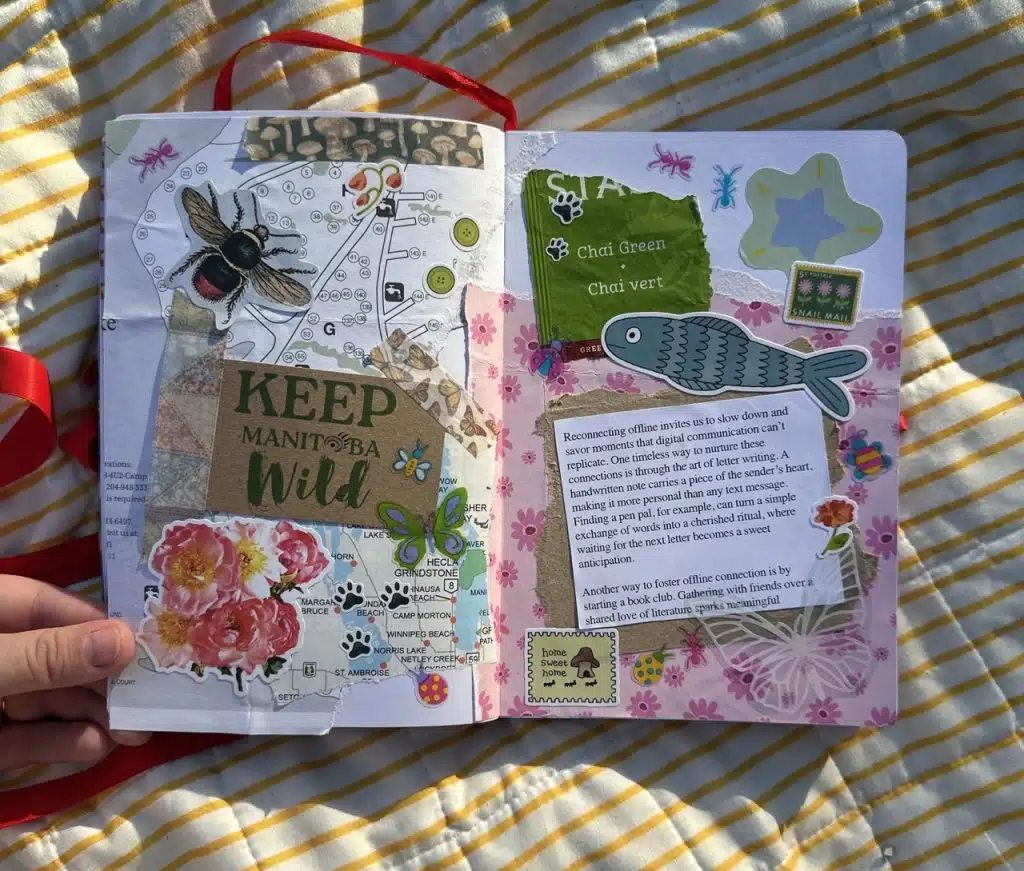
What is Junk Journaling?
Ever look at a ticket stub or a pretty piece of packaging and think, this is too good to toss? That’s the magic of junk journaling. Part scrapbook, part creative time capsule, it turns everyday “junk”—receipts, stickers, scraps, postcards—into artful pages filled with memories. Instead of buying piles of supplies, you simply gather the bits of life you already have. It’s eco-friendly, endlessly personal, and a whole new way to see the beauty in the things you usually overlook.
What You’ll Need:
The best part about journaling, is you most likely have anything you need already at home! If not, take a trip to your local craft store or dollar store to pick up a few things.
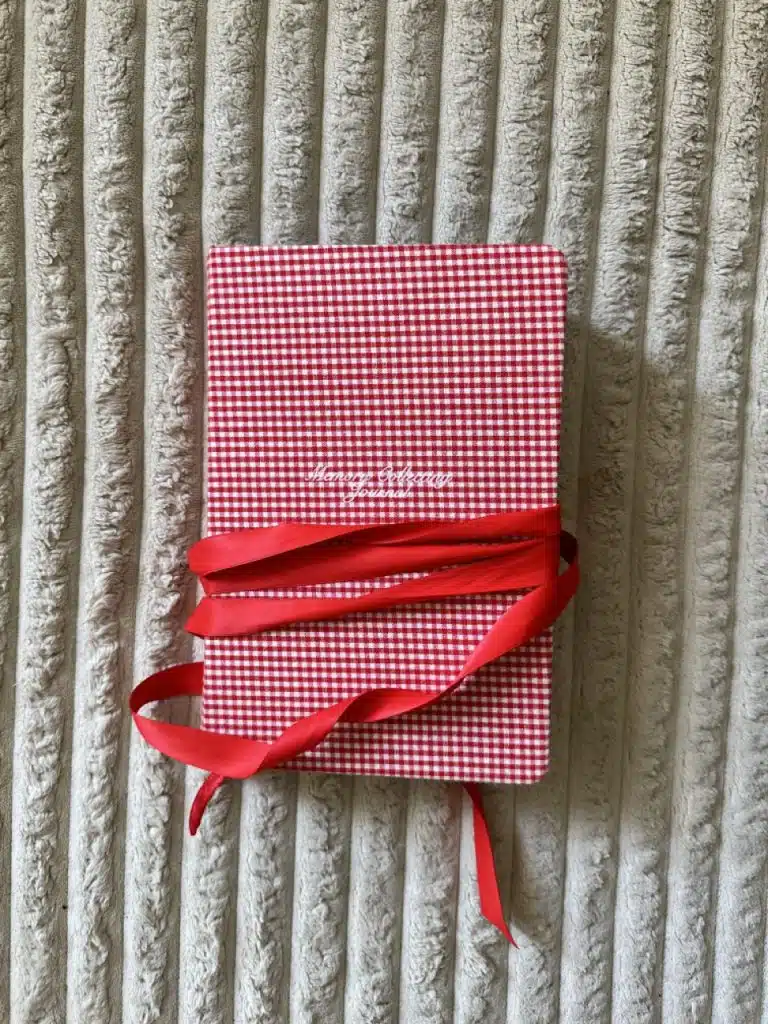
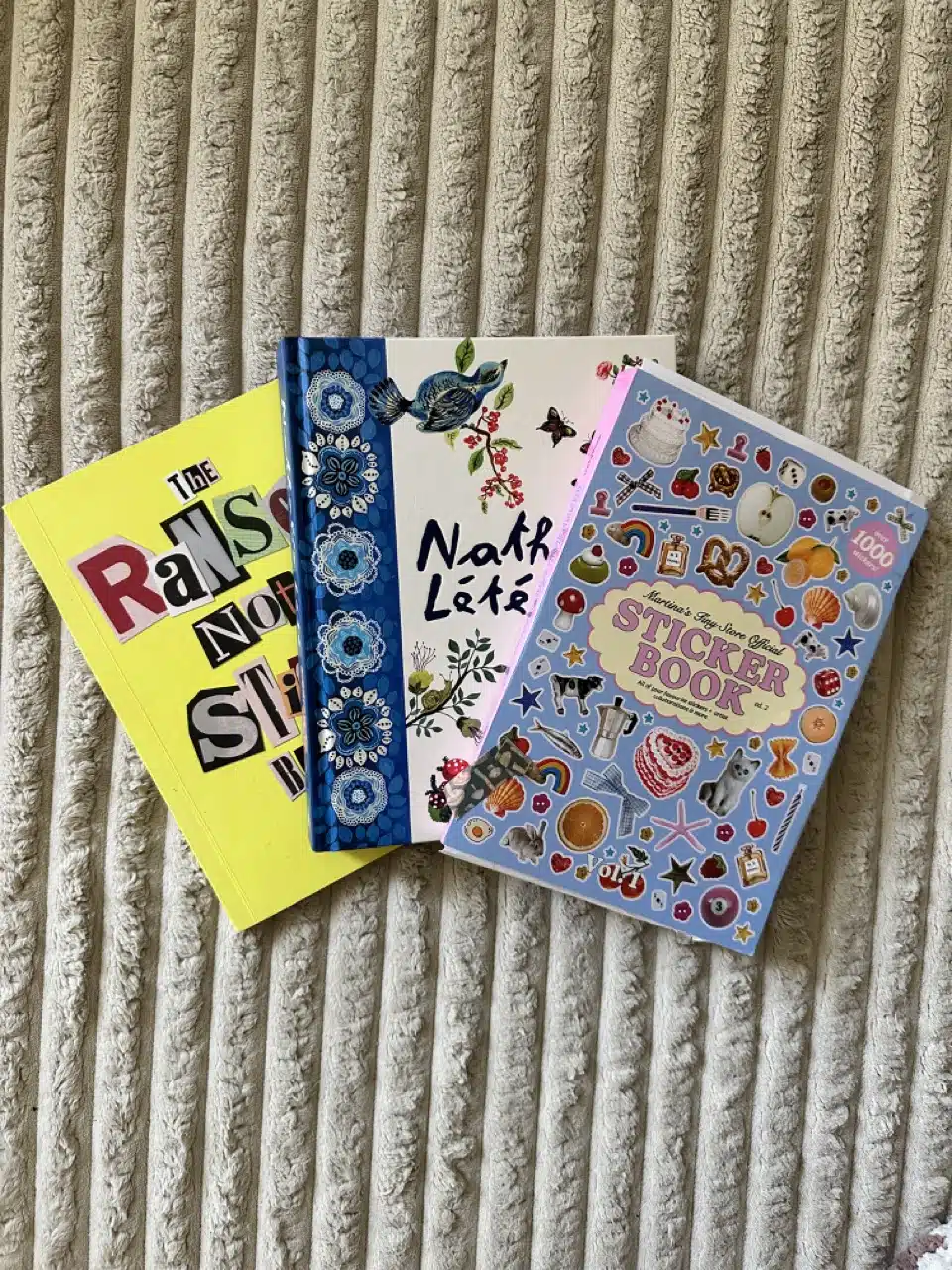
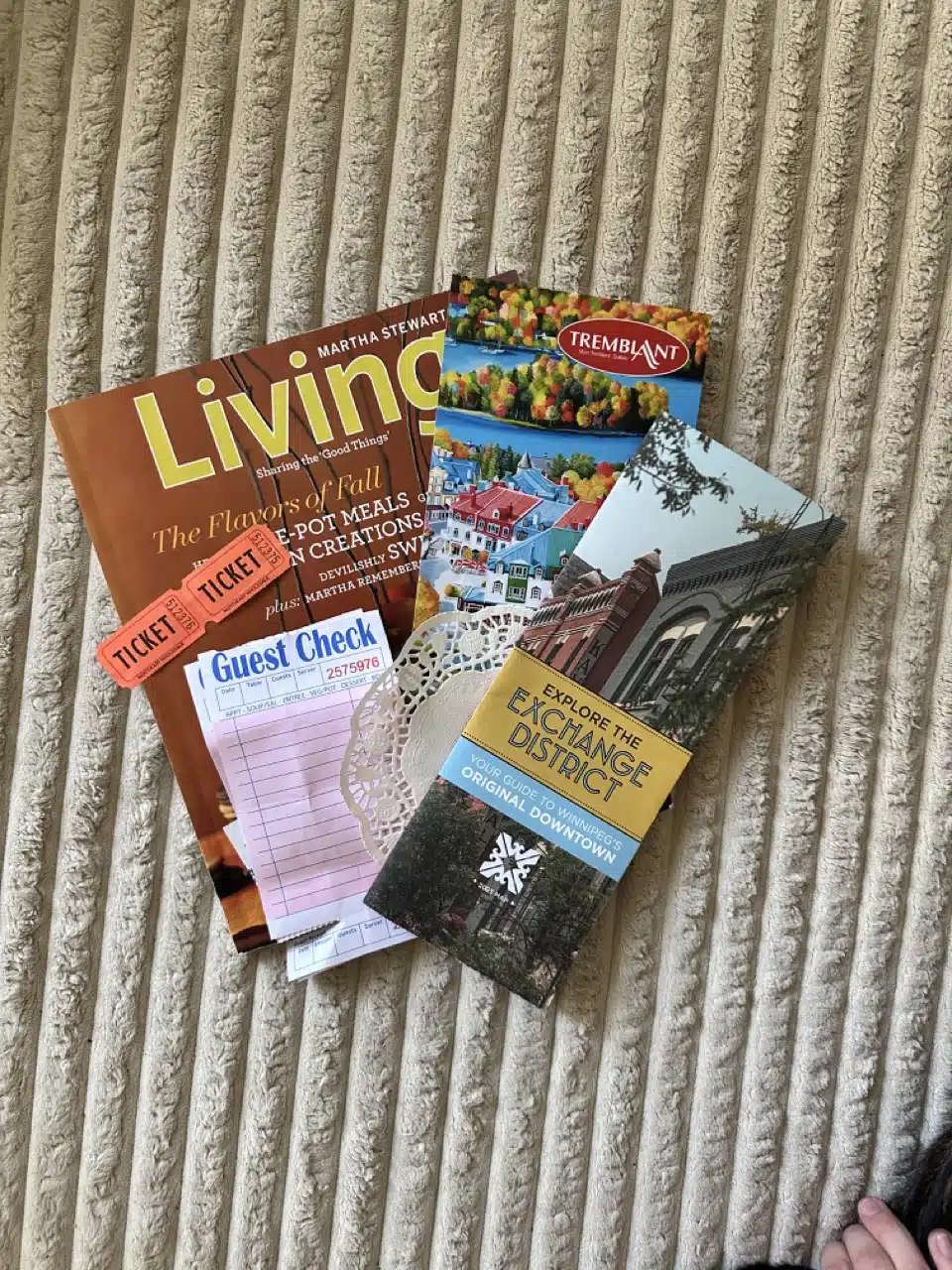
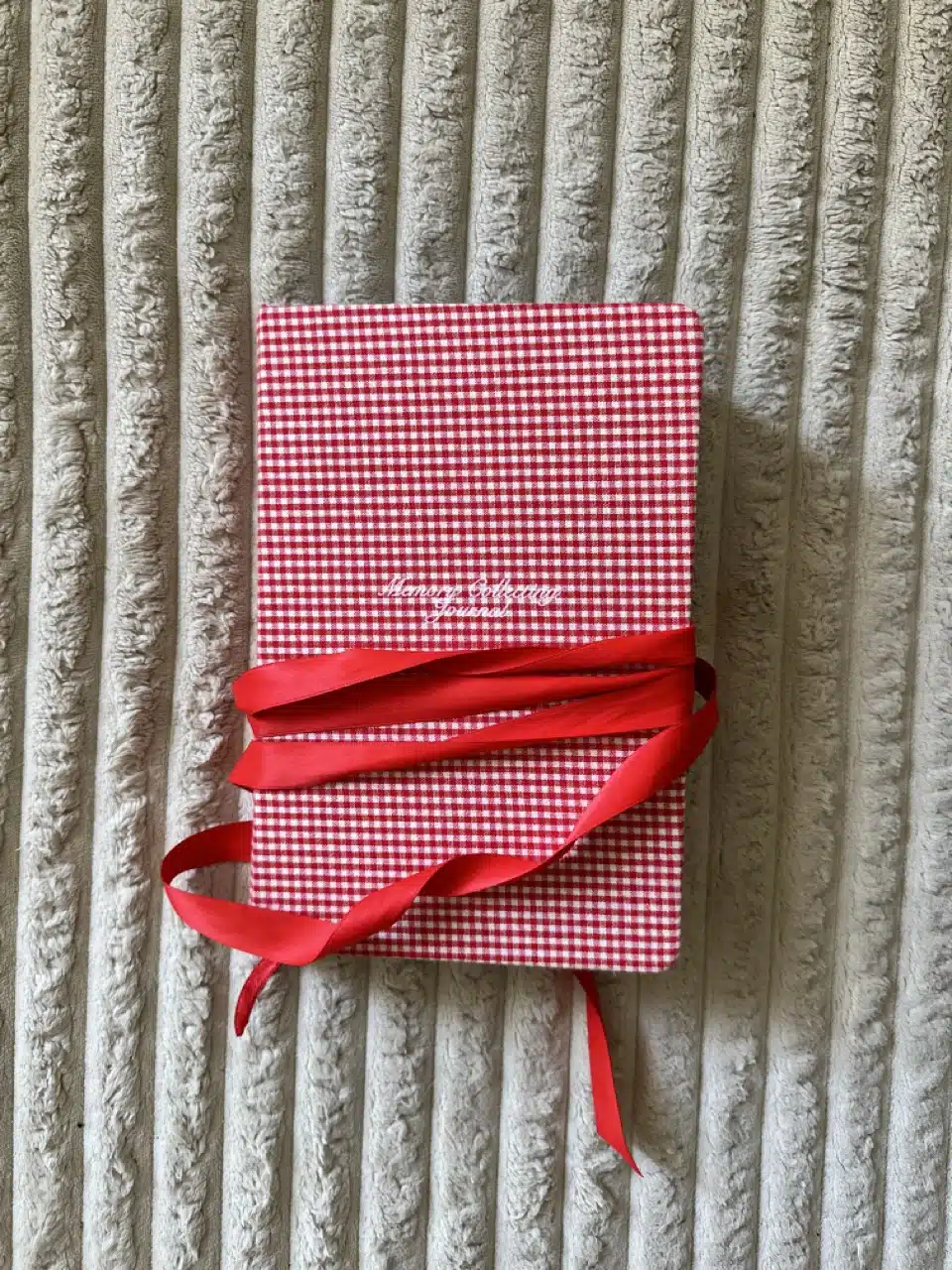
Journal
To start your journaling journey, you’ll need something to write or paste things on. This can be whatever works best for you, including a notebook, sketchbook, a canvas, or even digital by using an app on your phone. I prefer to use a size A5 Notebook with dotted or blank pages.
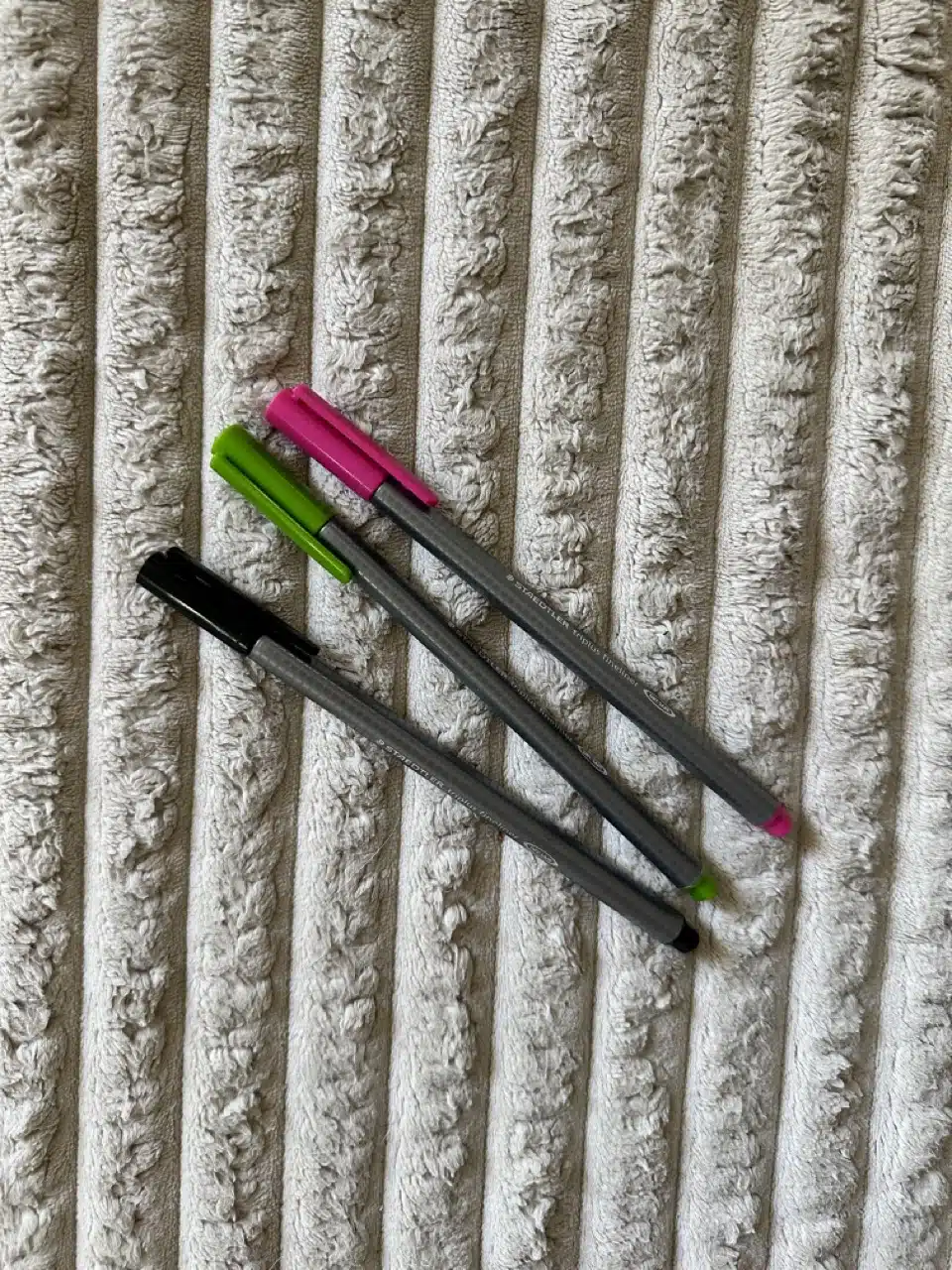
Writing Utensils
You’ll need something to write with! This can be whatever works for you, a pen, pencil, pencil crayons, markers, or crayons!
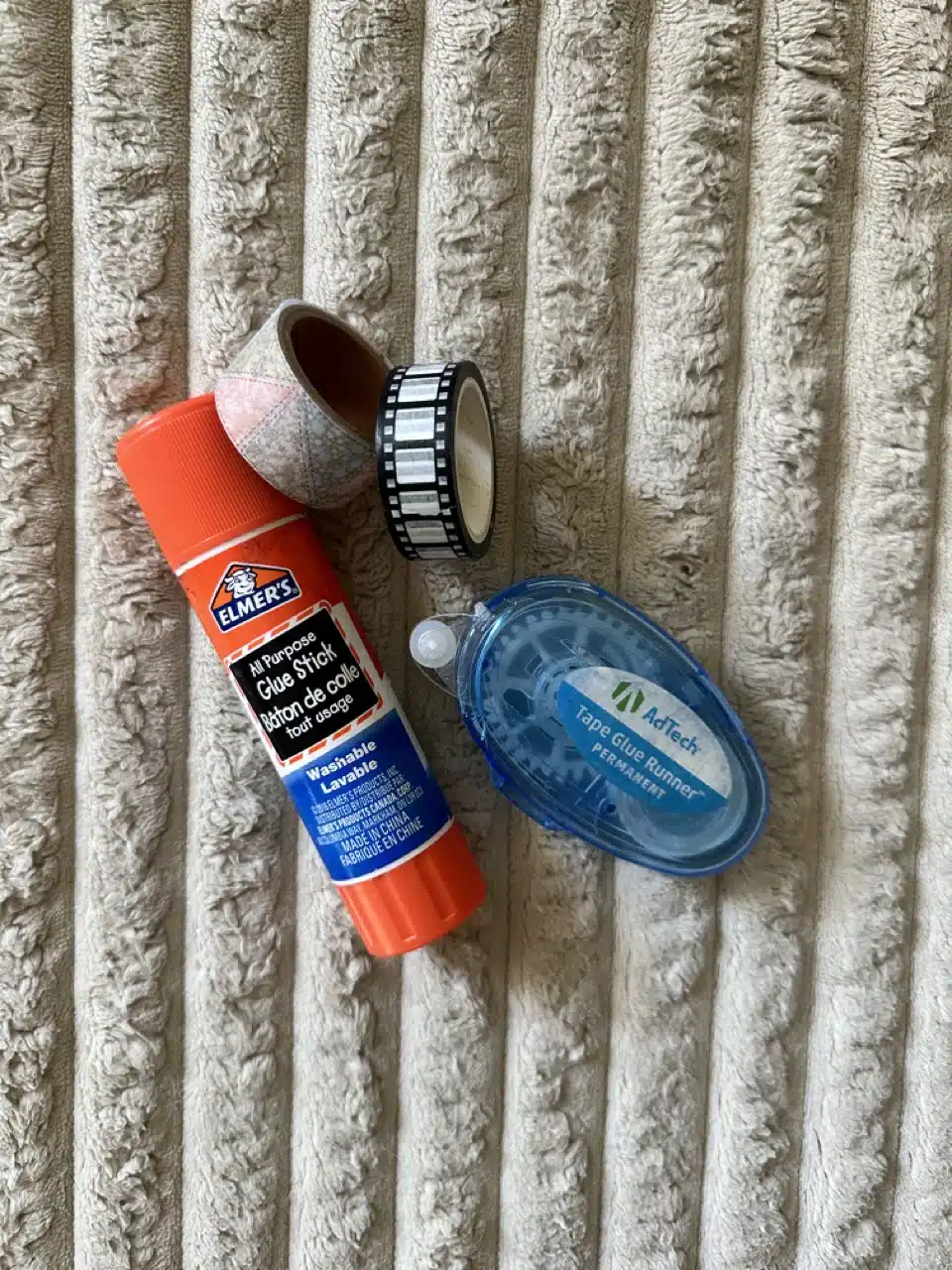
Sticky Things
To paste the junk you collect into your journal, you’ll need something sticky, this can be a glue stick, a glue gun, Mod Podge, tape runner, or washi tape. Use whatever you have on hand! My favourite is a classic Elmer’s all purpose glue stick.
Junk
Now the fun part, the junk in the junk journal. Junk can really be whatever you want it to be. The goal is to look at things differently, something you don’t need anymore and usually throw out? Well, look again. Are the colours inspiring? Does the art speak to you? If so, then save it! But here’s an idea of some of my favourite things to collect to add to my journal: polaroids, holiday cards, ticket stubs, magazine cut outs, brochures, wrappers, admission bracelets, maps, postcards, business cards, receipts, paper menus, napkins, and paper bags.
Stickers (optional)
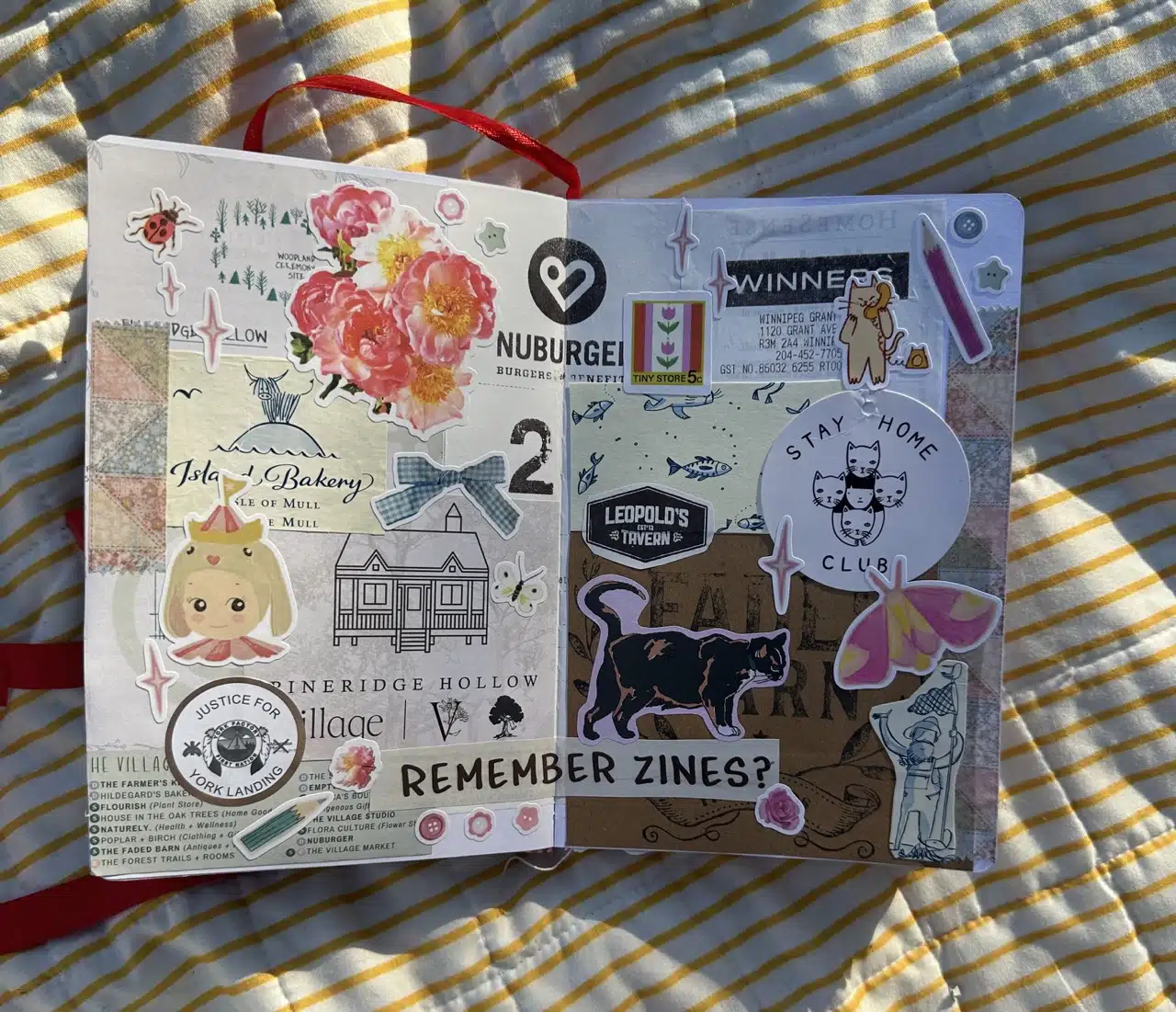
You have everything you need to start a junk journal, but if you want to embellish it more, look into stickers or make your own!
Look around and you can find them at dollar stores, local home stores, tourist attractions, and even coffee shops. My favourite places to get stickers are local spots like Riley Grae or McNally Robinson, small businesses like Martina’s Tiny Store, and tourist spots like local camp offices.
How to Start
Set up your zone
One of the most important parts of journaling is setting up your space. Take a minute to think about what space brings you the most peace and inspiration! Personally, I like to cycle through a few different spaces: at my desk, on a picnic blanket at a park, or at a coffee shop.
Now that you have your spot in mind, think about how you can elevate it through your 5 senses. Heres some examples:
- Touch: maybe cuddle up with a blanket
- Scent: Light a candle
- Vision: Turn on a warm lamp
- Taste: Prepare your favourite snack, or beverage
- Sound: Make a playlist of songs that inspire you or let the birds outside sing to you.
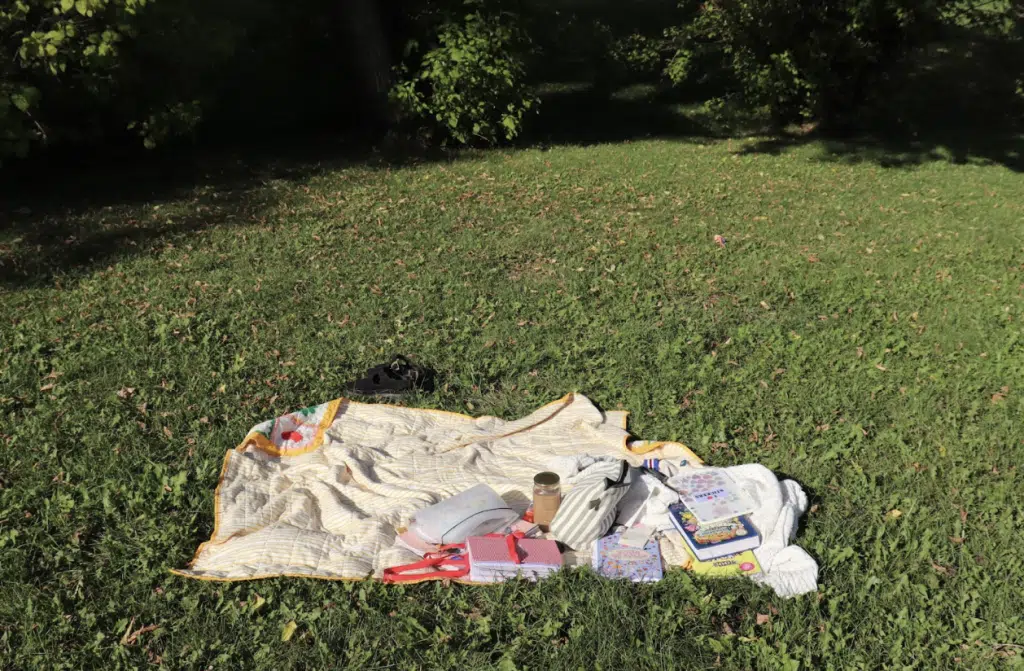
Choose a Theme
Before I start to put things on the page, I like to start with a theme to guide me. There are so many creative options you can take with this. Here’s some of my go to themes: choose a colour pallette and only use things that fit into it, pick a prompt like “things that make me happy,” “a day in the life,” a monthly recap, or a manifesting spread. Having a theme or prompt helps me stay grounded and not get overwhelmed.
Collection
Now that you have a theme, start to pick things out! Pick out junk and sticker that remind you of that theme.
Creation
Now to put it all together, I would say this step is the most personal and it’s important that you find what works for you. I like to start by glueing down the biggest pieces to act as the background, then I build up from there with junk, then I top it off with stickers.
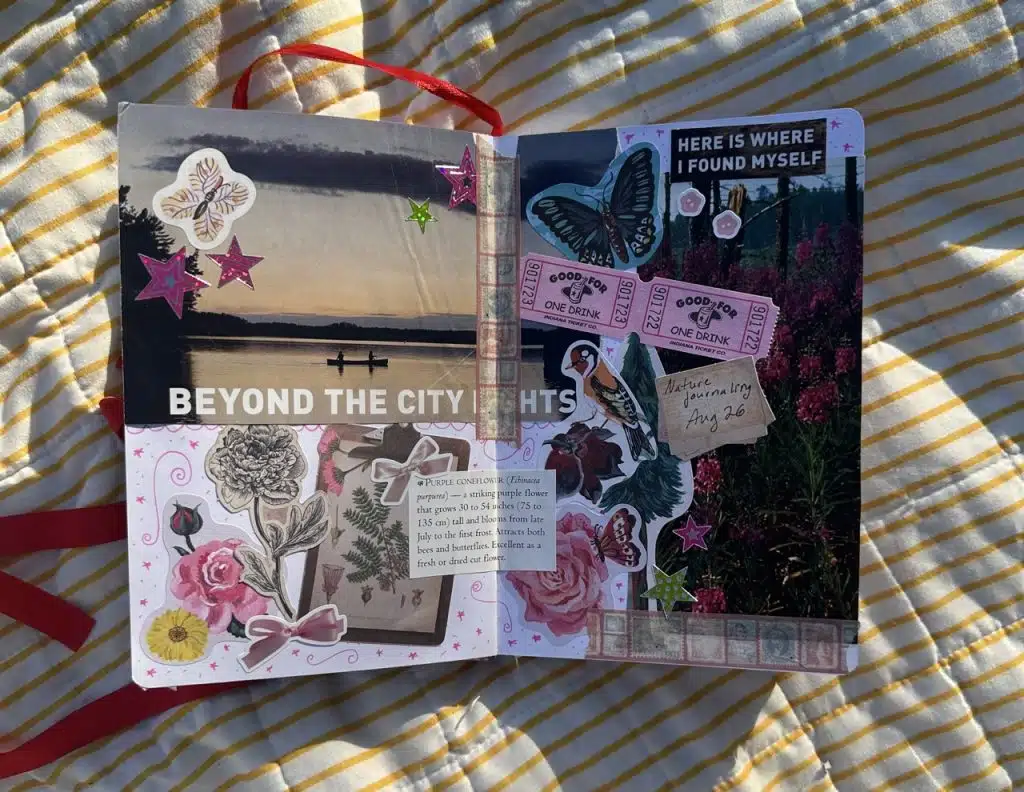
My Tips and Tricks
Its YOUR journal
First things first remember that journaling can be whatever you want it to be. It’s all about feeling comfortable, expressing yourself, and tapping into your creativity.
Leave No Trace
Heading out to the park to journal? Junk journaling can be a bit more messy than regular journaling. Remember to practice leave no trace principles when you’re out in nature.
Thrift Supplies
Looking for paper backgrounds or stickers to embellish the memories you’ve collected? Take a look at the thrift store. Here you can find lots of pencil crayons, markers, magazines, and stickers. By buying second hand, you can find interesting pieces that you can’t find anywhere else.
Why You Should Start a Junk Journal
Self Reflection
The practice of sitting down and creating is a great way to practice self-reflection, and gratitude.
Stress Relieve
Science has proven that creating art relieves stress and anxiety, while helping feelings of shame, anger or depression.
Eco-Friendly
Junk journaling is a creative hobby with a surprisingly light footprint. Instead of buying stacks of new supplies, you give a second life to materials that might otherwise end up in the trash or recycling bin. By collecting and reimagining everyday “junk,” you’re keeping those items out of landfills while also avoiding the carbon costs of manufacturing and shipping brand-new craft supplies.
Now Go Start!
Now, five years later, I can flip through my journals and see the most important moments of my life gathered on those pages. Those little scraps mean more to me than anything. If my house were ever burning down and I could only save one thing, it would be my cats—but the very next thing would be that pile of journals.
So gather those odds and ends, pour a cup of something cosy, and start gluing.
Check out these Resources to Learn More
Nature journaling more your thing? Check out our nature journaling prompts
Check out local Winnipeg craft and stationary stores:
Looking to join a community?
- Attend a workshop at Art Junktion
- Join the FREE “Community and Crafts” every Wednesday at The Forks Market
- Join our Nature Club so you don’t miss out on our next Nature Journaling Workshop
Interested in reading about crafts and creativity? *all available at Winnipeg Libraries
- Atomic Habits by James Clear
- The Creative Act: A Way of Being by Rick Rubin
- The Art of Memory Collecting by Martina Calvi