
February 13, 2026
Churchill gathers to discuss the future of Hudson Bay
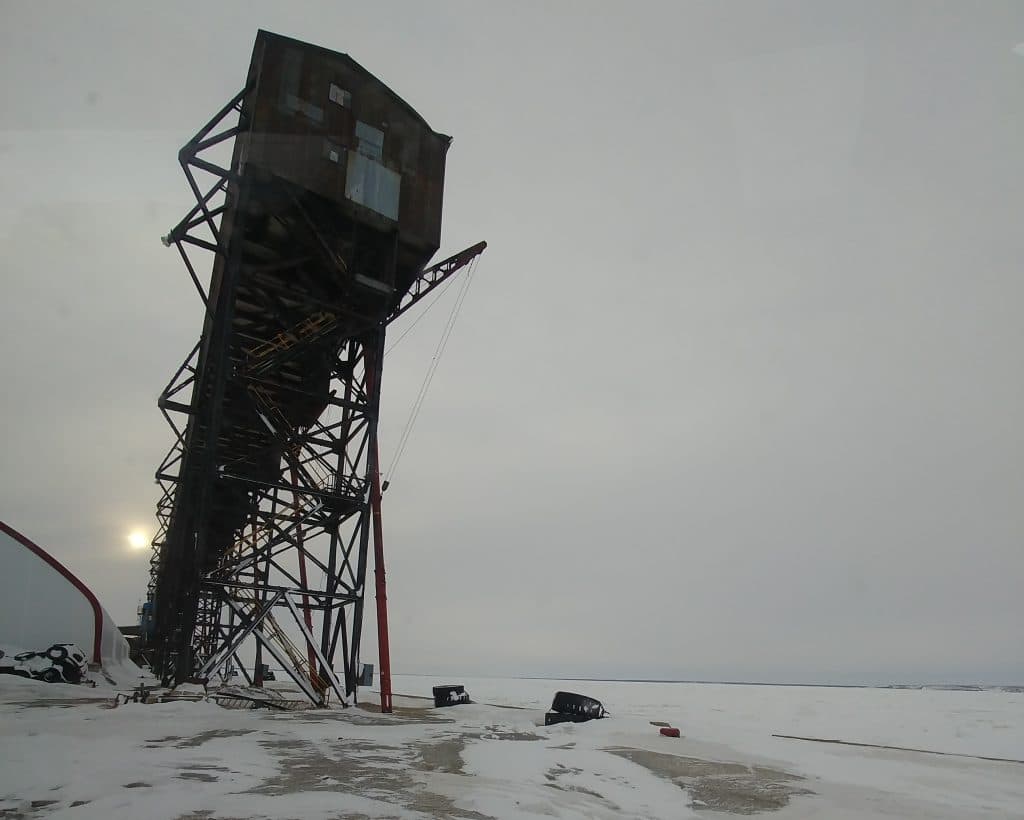
The first week of February was a big week for Churchill. The provincial government announced its support for a federally led feasibility study exploring a National Marine Conservation Area in Western Hudson Bay in the form of a $250,000 investment and hosted a town hall for Churchill residents and business to discuss the future of the Port of Churchill and possible future investments.
The CPAWS Manitoba team was there on the ground throughout the week to make sure conservation stayed in the conversation. And it did, we consistently heard from community members and business leaders that the environment, and the wildlife in particular, were key to the northern way of life, from livelihoods and businesses, to family recreation, cultural ties and food systems. Seeking balance for the bay we are so thankful to have been able to meet with the Arctic Gateway Group, tourism operators, government officials, scientists, and townspeople of all walks of life.
A Great Start for Nature Investment
Our Executive Director, Ron Thiessen was pleased to join the Premier Kinew, federal and provincial ministers, Chief Wastesicoot of York Factory First Nation, Chief Morris Beardy from Fox lake, Mayor Mike Spence and other community leaders and partners at the announcement of $250,000 of funding by the province of Manitoba to support a Parks Canada led feasibility study into a National Marine Conservation Area for Western Hudson Bay. This is a great start in nature investment, which we hope will translate to even further funding for nature and climate solutions in MB Budget 2026.
Federal Minister of Northern and Arctic Affairs, Rebecca Chartrand said “The Western Hudson Bay is an area of immense ecological importance and deep cultural meaning. It is also home to beluga whales, rich marine life, and a diverse coastal ecosystem that shape the identity of this region and the people who live here, which are all of you. The collaboration we’re announcing today reflects a shared commitment to safeguard what makes this place extraordinary, while also planning responsibly for its future.”
Premier Wab Kinew echoed the minister saying “…whether you’re from the north, whether you’re from the south, wherever you are in Manitoba, you know that part of being able to put food on the table means taking care of the land, the water, the air, and the animals that we depend on. And so, this investment is really just about making sure that we’re putting the pieces together so that we can ensure that that legacy is preserved for future generations.”
Chief Watesicoot of York Factory First Nation added, “The government of Canada took us inland back in 1957 from the York Factory area. So that’s been our traditional territory forever, and to be taken from there and put somewhere else that we’re not familiar with has been tough. It’s still tough today. So what we decided to do is just go back to our traditional territory, and part of the tradition…So today, I’m going to say that we’re back in our land. We’re actively on the land…I’m just really happy with the announcement today, and I just want to also say that we are not here just to participate in the process. We are here to be leaders of stewarding the Western Hudson Bay, which is called Kischikamee. The establishment of a potential NMCA would be another step in a major effort to increase our presence on our coastal traditional territory.”
“If Manitoba is serious about balanced development, we must ensure that our economic ambitions don’t outpace our responsibility. Churchill is a confluence of rivers and sea, of ecology and economy, of history and future. And today, Manitoba is choosing to meet that future with care.”
-Chris Debicki, VP Policy Development and Counsel, Oceans North
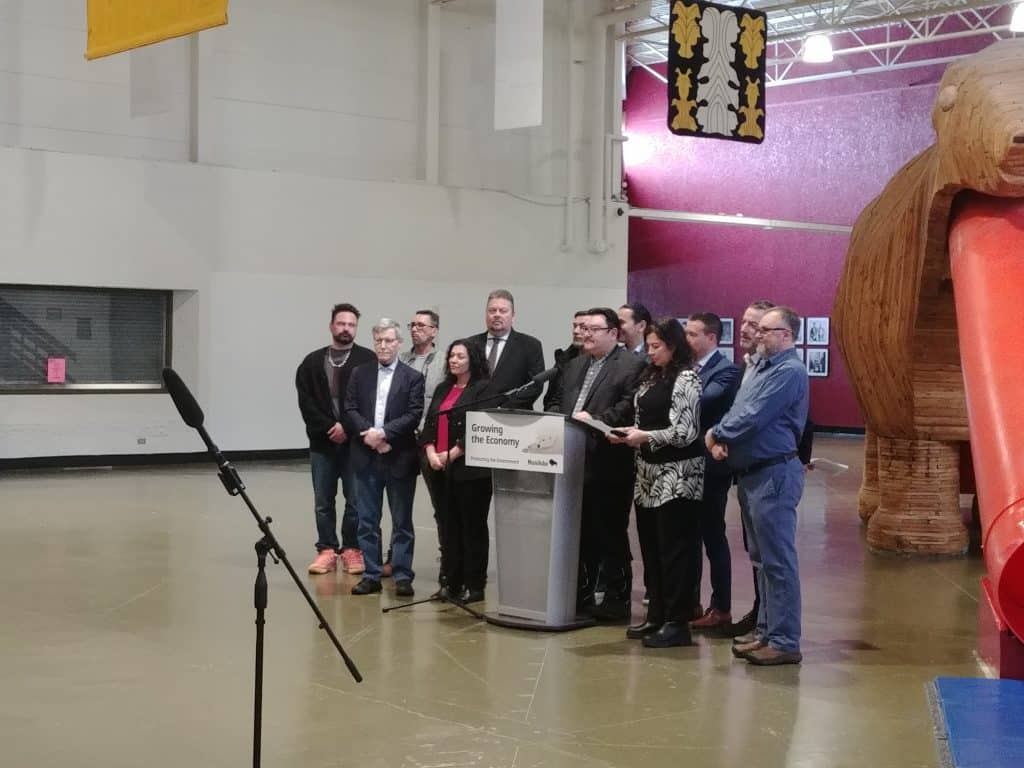
The National Marine Conservation Area (NMCA) feasibility process will involve Indigenous rights holders and partners, local communities and stakeholders, the provincial government, and federal departments and agencies. It will explore the benefits to people and wildlife and most importantly, if this is something that is wanted by local communities.
Ron Thiessen, Executive Director of CPAWS Manitoba shared, “Western Hudson Bay is home to tens of thousands of beluga whales, supports earth’s most famous polar bear population, and provides a vital stopover for migratory birds that link continents. These waters are integral to Indigenous cultures and underpin Churchill’s world-renowned tourism economy. A national marine conservation area will help ensure future development unfolds responsibly and in true partnership with northern communities.”
A Community Gathers to Share Their Voice
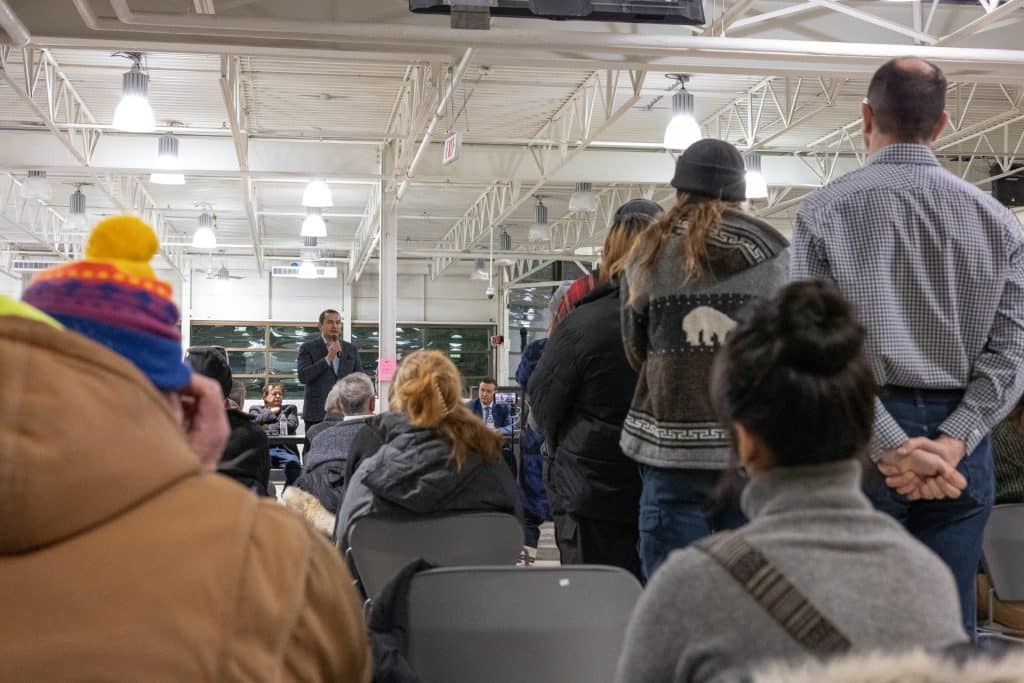
Throughout the week, it was clear that Churchillians care about their community. This was felt by all in the room at the Town Hall and echoed by government representatives including Minister of Environment and Climate Change Mike Moyes. Many people came up to the microphone to ask questions of Premier Wab Kinew and other provincial, federal and municipal representatives on the panel.
““It’s clear how much this community cares.”
– Minister of the Environment Mike Moyes
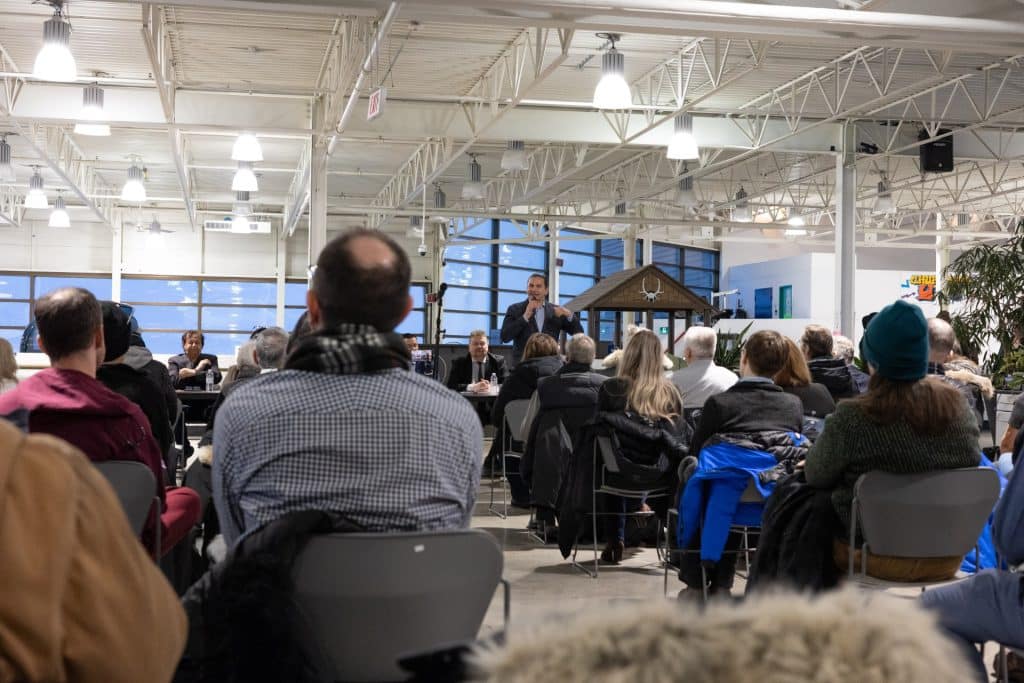
Premier Wab Kinew expressed the government’s “deep commitment to continuing the way of life in Churchill” saying,
“We’re not going to do the next round of investments on that mega project if people don’t want it here.”
The mega project in question – Churchill Port Plus, a proposed national investment into updating and modernizing the port, maintaining and repairing rail lines and even possibly making new roads into northern communities, including Churchill. One youth community member spoke up strongly against a road, advocating for the caribou herds that could be affected, that provide valuable food resources to northern communities.
Another topic of the night was a potential liquified national gas terminal as a “baseline commodity” for Churchill, receiving mixed reviews from residents. Despite the premier’s public advocacy for LNG, he did tell the room his government will take it seriously if people don’t want LNG here.
“We’re not going to say a shipping lane at all costs.”
– Premier Wab Kinew
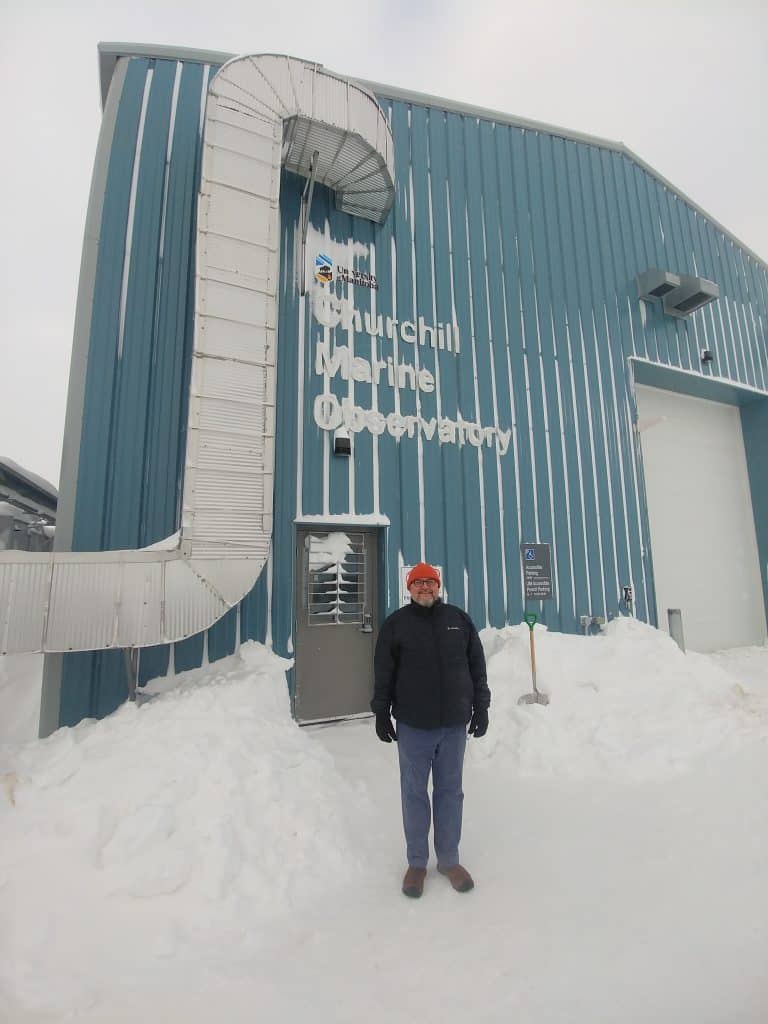
One thing that was stressed is that multiple concurrent studies are being completed to help map out the future of Hudson Bay. A market analysis for port viability is being conducted, set to be complete some time this spring. An ice-breaker study and oil spill research are also being explored through the Arctic Research Foundation and the Churchill Marine Observatory. Interest and need for a new National Marine Conservation Area in Western Hudson Bay will be explored through a feasibility study with Indigenous and local community partners.
The future of Churchill is open and it’s clear that the town cares deeply, with nearly 125 filling the recreation centre complex space during busy school pick-up and supper time. The scheduled one-hour town hall extended to two and half hours with a long, but respectful, discussion period.
Mayor Michael Spence closed the town hall off by saying,
“There is hope for a community that strives to showcase what we can do collectively…we care about the environment and we can do things right.”
Here at the CPAWS team we’re grateful to have been in the room and many others throughout the week. Many thanks to those that invited us into their homes and business and allowed us to listen to their concerns. We look forward to many more discussions, more tea and cookies, and more chances to find out how we can help reach a balance for the bay.
About National Marine Conservation Areas
It’s an exciting time in the North, with Manitoba supporting opportunities in Churchill through port redevelopment and marine conservation. A National Marine Conservation Area (NMCA), as proposed by Parks Canada, is a promising way to explore Western Hudson Bay’s future.
Who benefits from an NMCA?
Wildlife: An NMCA in Western Hudson Bay could protect important wildlife, including belugas and polar bears. By establishing clear shipping lanes and directions, this could reduce underwater noise, lower the risk of collisions between ships and animals, and help prevent pollution which threatens water quality and fragile ecosystems.
Community: Coastal communities need a healthy ocean to support local jobs, cultural practices, and food systems. An NMCA could provide new, long-term jobs for locals in monitoring, tourism and more.
Tourism: Churchill’s local tourism economy relies on its rugged charms, amazing natural setting, and abundant wildlife. It’s important to make sure the natural wonders which locals enjoy year-round, and tourists travel from all over the world to see, are kept healthy.
Business: An NMCA could provide businesses with greater certainty and predictability for long-term planning and operations through clear guidance and designated shipping routes.
What’s Next?
Before a National Marine Conservation Area can be created, Parks Canada must determine whether protection is both feasible and desirable, in other words: is it going to be successful and is it wanted?
This involves a comprehensive feasibility assessment in collaboration with: Indigenous rights holders and partners, local communities and stakeholders, the provincial government, and federal departments and agencies.
If the area is deemed suitable, negotiations begin to officially establish the NMCA.
How Can I Help?
Lend your voice! Send a letter to help launch the feasibility study now!
This blog was made possible through the generous support of the National Audubon Society. We’re grateful for their partnership, collaboration, and shared commitment to protecting the lands, waters, and wildlife we all cherish.