
May 23, 2025
Spring 2025 Environmental Education Pond Workshop
Elyce, Conservation Outreach Ambassador
A Special Connection with Riverbend
Over the years, our education team has built an incredible relationship with the students and teachers at Riverbend Community School. We’ve run many workshops together, and every time, we’re inspired by how curious and passionate these students are about the natural world. So when a group of them spotted a struggling fish in the pond near their school—and thought the water looked polluted—they didn’t just walk away. They reached out to Carly, our Education Program Coordinator, to ask: What can we do to help?
Their compassion and drive to take action reminded us why environmental education matters so deeply. We knew we had to help, and fast. What followed was a hands-on, student-led exploration of nature, science, and conservation in their very own schoolyard. Here’s how it went.
Spotting Trouble in the Pond
It all started when students noticed something wasn’t right. A fish was having a hard time swimming, and the water looked murky. They suspected pollution. But instead of ignoring it, they took initiative—and reached out to us for guidance.
We quickly developed a custom workshop to support their concern, combining conservation science, fun outdoor learning, and real-world problem-solving.
Turning Curiosity into Action
We kicked off the day with a visit to the pond, where students observed the fish, took notes on its behaviour, and discussed what a healthy aquatic environment should look like. The mystery fish sparked questions and curiosity—and the learning flowed from there.
Game On: Learning Through Play
Activity:
To get students moving and thinking, we started with a fast-paced outdoor game—Food Chain Tag! A few students played “bullhead catfish,” tagging “minnows” who were collecting algae (popsicle sticks) as food. As the rounds progressed, food sources became harder to find, mimicking ecosystem imbalances.
Learning Outcome:
Students learned how energy flows through food chains and how environmental changes affect different species. It was a powerful way to show how everything in nature is connected—and it got their hearts pumping too!
Fish Detectives: ID in Action
Activity:
Next, students became fish detectives. Led by CPAWS Manitoba Conservation Officer Nadia, they worked in small groups to compare two fish species: the bullhead catfish and the channel catfish.
“It’s got more whiskers than the other one!” a student shouted.
“And this one has a rounder tail!”
Learning Outcome:
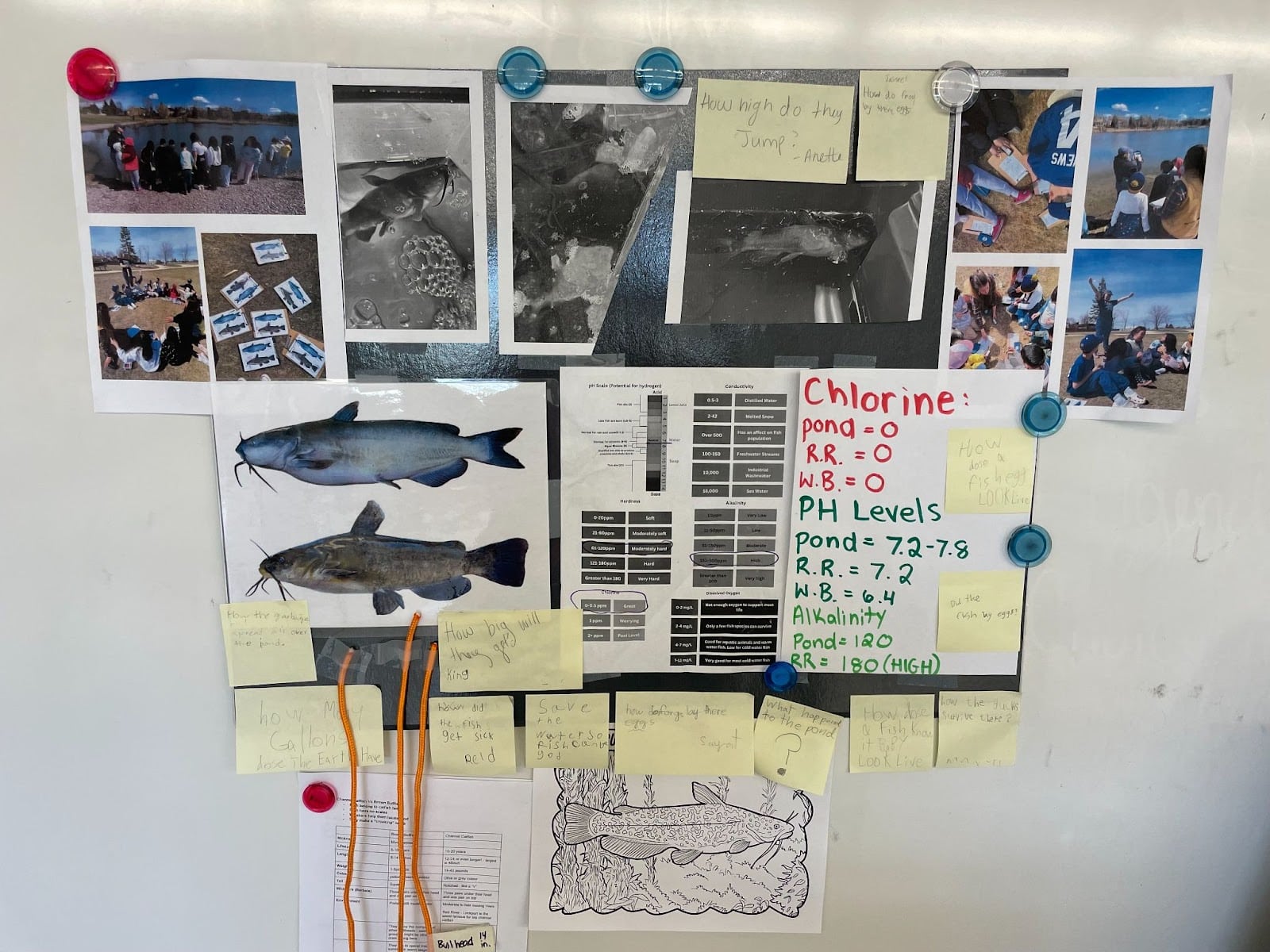
By observing fin size, body shape, colours, and barbels (those fishy whiskers), students correctly identified their pond visitor as a bullhead catfish.
Is This Pond a Healthy Home?
Activity:
With their fish IDed, students turned their attention to the pond itself. Was it a safe place for bullhead catfish to live?
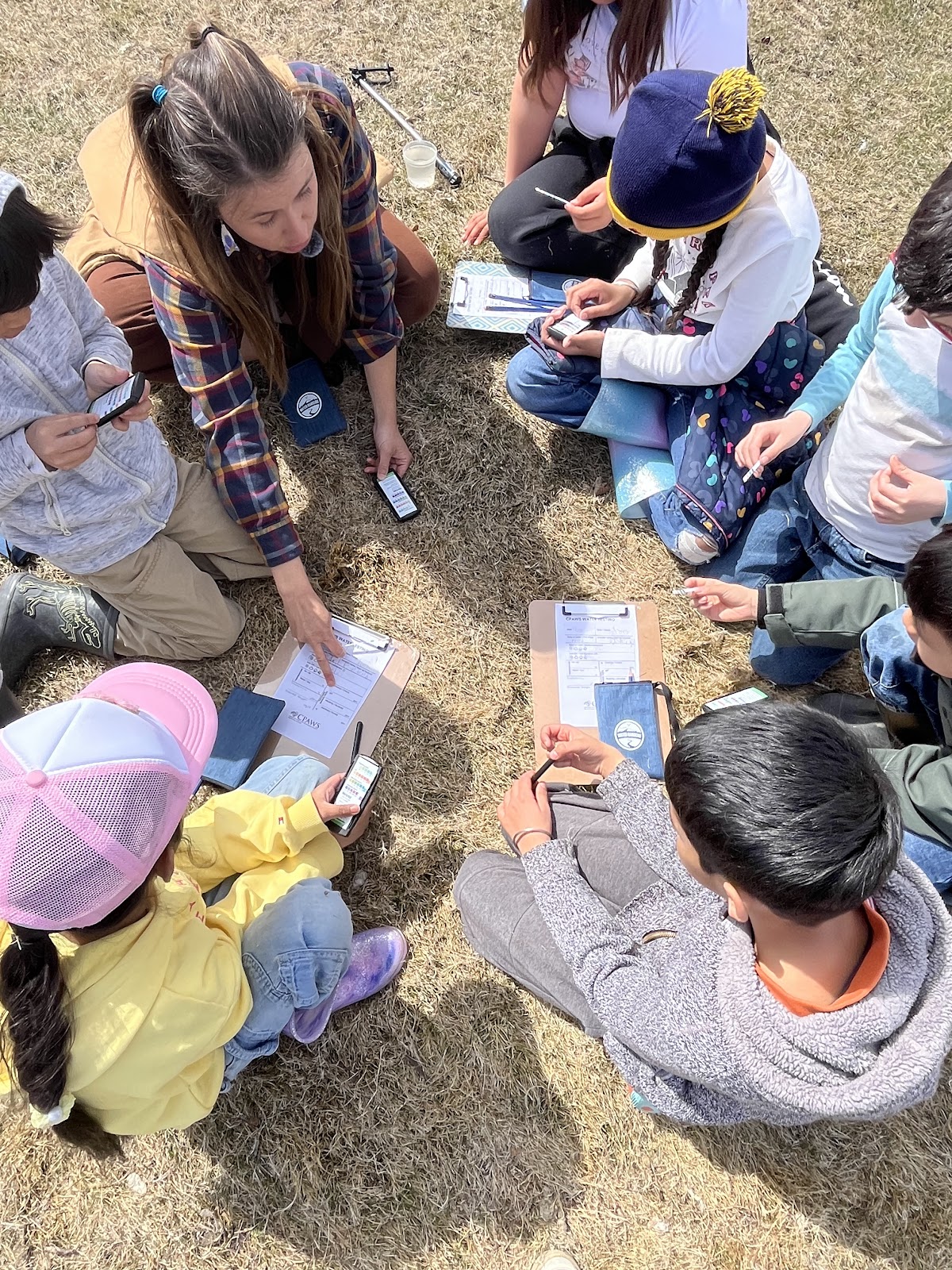
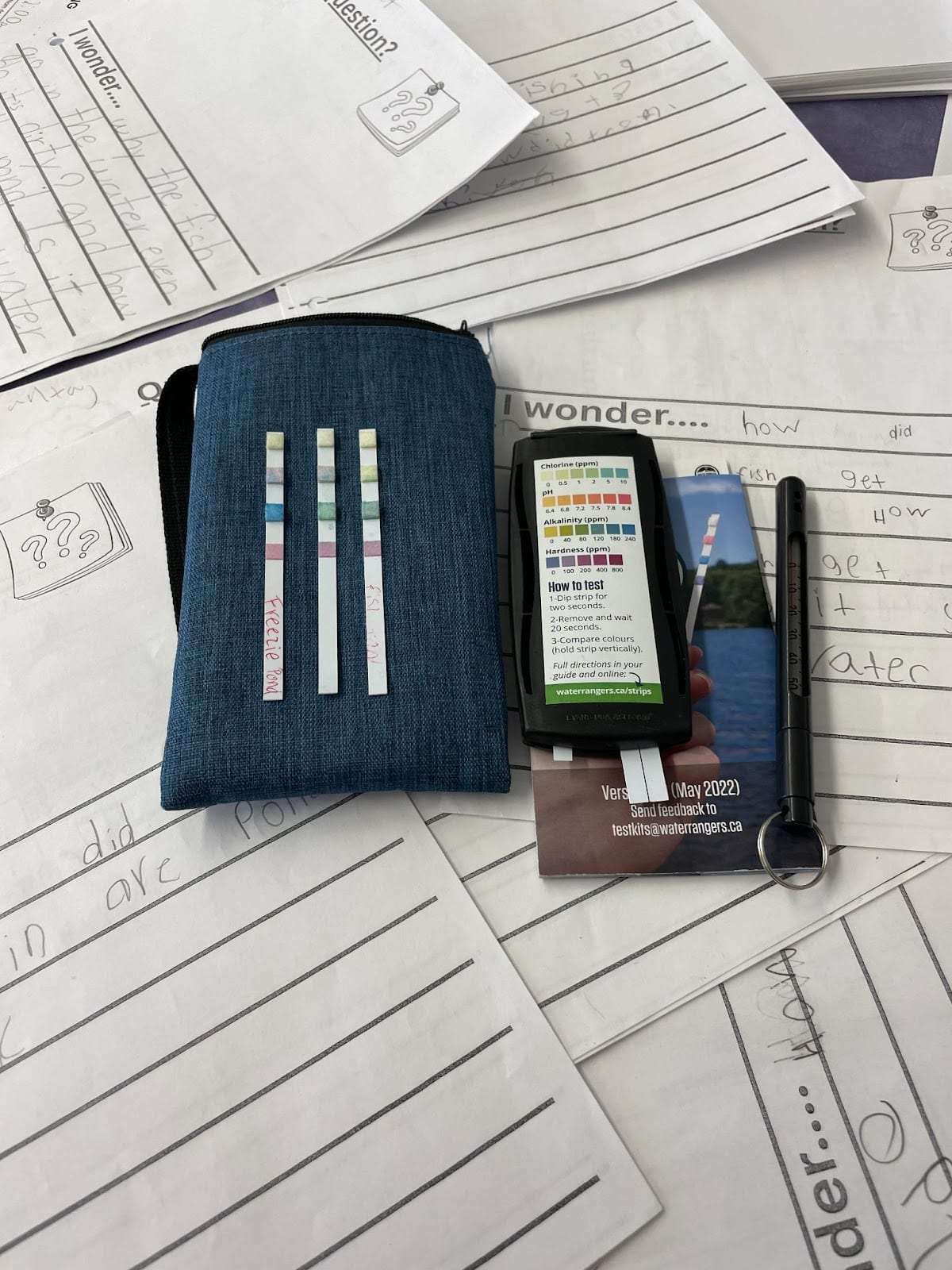
We brought water testing kits to the site and helped the class gather samples (with adult supervision). They tested for oxygen levels, pH, chlorine, water hardness, and alkalinity, and compared the pond water to a cleaner sample from the Red River.
“The pond water was way warmer and had less oxygen!” said one student, wide-eyed.
“I think that’s why the fish was struggling.”
Learning Outcome:
Students practiced the scientific method by forming hypotheses, testing samples, and recording their results—just like real environmental scientists.
Science in Their Hands, Solutions in Their Hearts
After completing their tests, students reviewed their findings and began brainstorming ways to help the pond. They came up with ideas like removing litter, educating others, and checking the pond regularly to monitor changes.
“We could help the pond by treating it better—by not putting any plastic or harmful stuff in it to keep the water safe,” said a Grade 3 student.
They even took action that same day with a litter cleanup—proving that even small steps can make a big difference.
Why Student Engagement Matters
When kids connect with nature in a personal, hands-on way, something amazing happens: they begin to care, and they start to act. That’s exactly what we saw at Riverbend. These students didn’t just learn about conservation—they became conservationists. They asked questions, used science to find answers, and took real steps to protect a place they care about.
That’s the kind of ripple effect we aim for through environmental education: knowledge that leads to action, and action that leads to change.
“CPAWS you rock! Your knowledge and expertise in conservation is appreciated. Thank you for sharing your gift of knowledge with us,” said Riverbend teacher Ms. Gagnon.
Inspired to Take Action?
- Sign up for our education newsletter for updates and booking opportunities
- Because when students see that they have the power to protect the planet—they start using it.
CPAWS Manitoba’s Outdoor Education Program is made possible with funding from Manitoba Habitat Conservancy (MHC) through the Conservation Trust. Established by the Province of Manitoba, the Conservation and GROW Trusts support lasting, nature-based solutions that protect wildlife habitat and help address climate change, supporting opportunities for youth to connect with and learn from nature.