
August 15, 2025
Seal River Watershed Land Summit 2025
By Carly, Education Manager
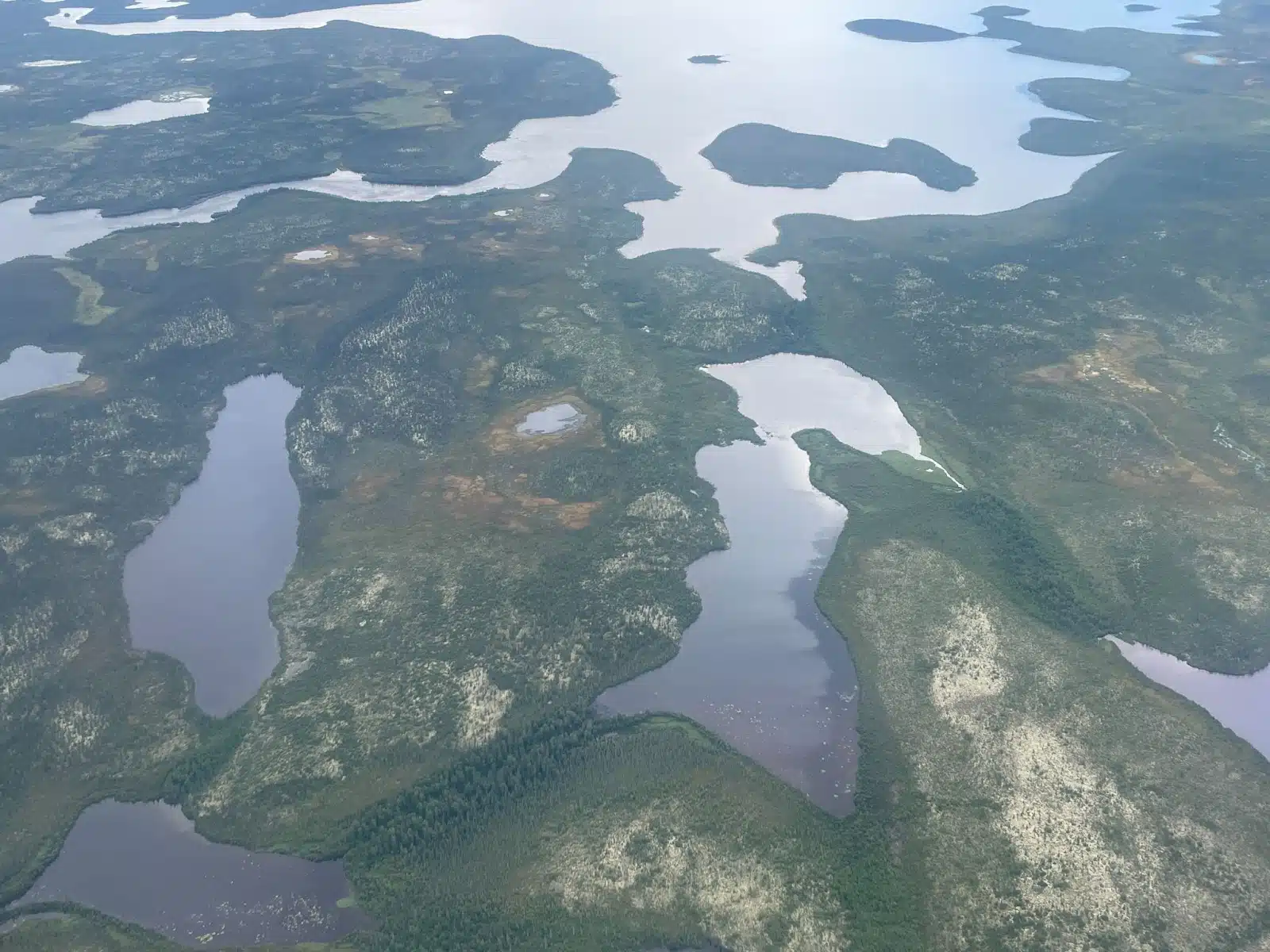
This past week our Education Manager, Carly Gray, made the trip up to Tadoule Lake for the 2025 Land Summit, hosted by the Seal River Watershed Alliance. This gathering united Elders, Knowledge Keepers, Tadoule Lake Community Members, and Land Guardians from First Nation communities in Manitoba.
“I was there to listen and learn, to think of ways that honour the knowledge and respectfully share it with future generations. In education, there is a large push towards incorporating First Nation worldviews and letting Pegagody guide the way we teach. This was an incredible opportunity to learn authentically about the Seal River Watershed Alliance’s Initiative, the land, and the individuals who steward it. I am beyond grateful to have been there and connected with many incredible people who are passionate about practicing traditional culture, language, and protecting the land and waters,” said Gray.
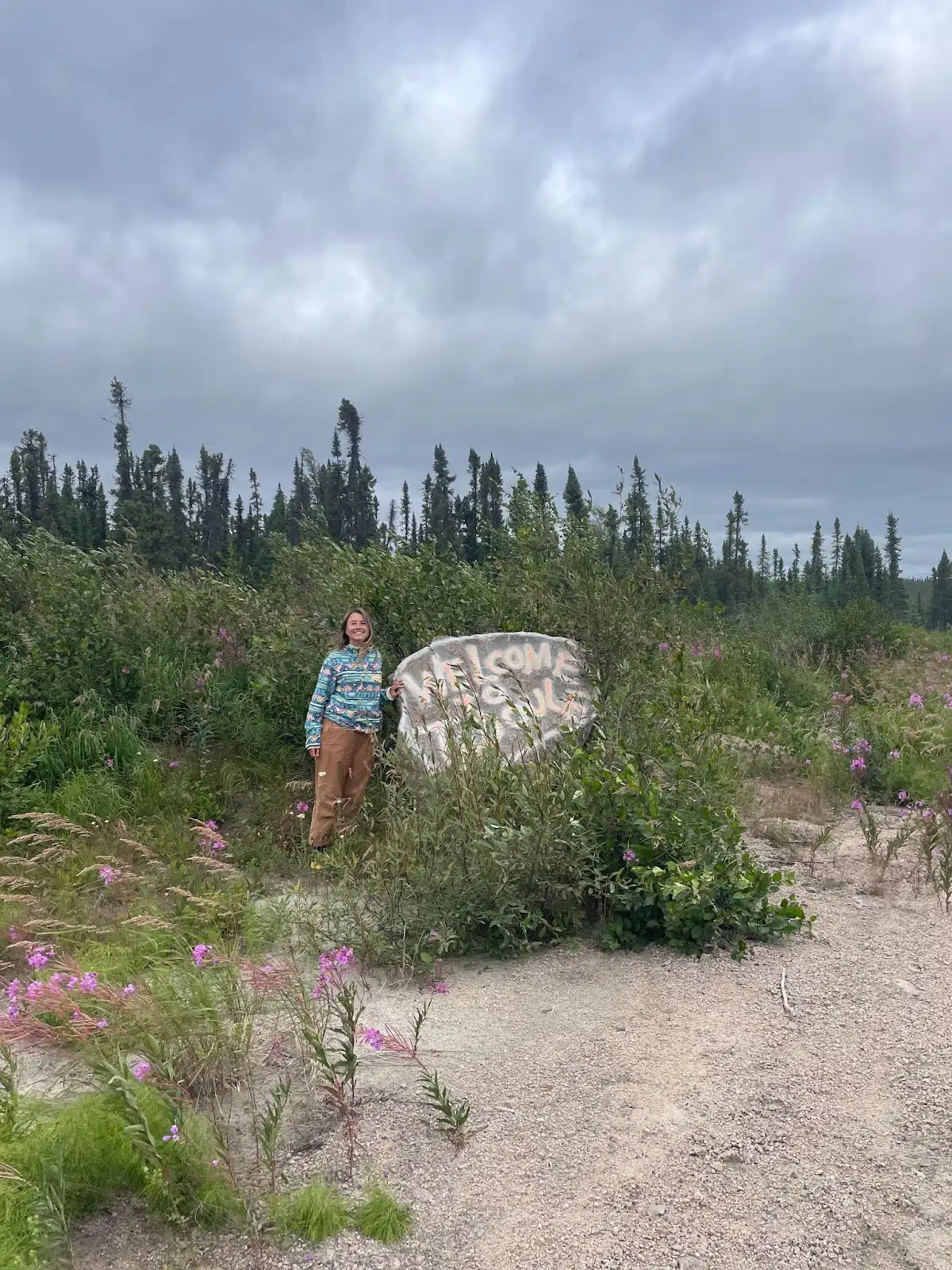
Where is Tadoule Lake?
Tadoule Lake sits in the heart of the 50,000 km² Seal River Watershed in northern Manitoba, about 1,000 km north of Winnipeg. It is home to Sayisi Dene First Nation, the most eastern Dene Peoples, who live on its beautiful shores with a population of fewer than 400 people. Four First Nations have united to protect this vast and pristine region: Sayisi Dene First Nation, Northlands Dene Nation, Barren Lands First Nation, and O-Pipon-Na-Piwin Cree Nation. Together, these Nations—connected by geography, culture, and relationship to the land —are working to protect the Seal River Watershed for future generations.
Their collaboration reflects a powerful understanding: that protecting the Seal River Watershed is not only about conserving nature, but about honouring generations of Traditional Indigenous Knowledge, practicing cultural ways of knowing, language revitalization, and ensuring the land continues to sustain life for generations to come.
With representation from northern communities, along with people from southern First Nation Communities, First Nations Knowledge and Languages are diverse and have been present on every landscape in Manitoba, interbeing alongside the natural world as her steward.
We travelled an hour by boat to a sacred place where Sayisi Dene Peoples have been coming since the community’s relocation to Tadoule Lake. The connection to this land was shared through laughter, experiences, stories, traditional games, and cultural practices.
Summer Camp Experience
The Seal River Watershed Alliance Land Summit was an opportunity to get Land Guardians out on the land, learning from one another and bring together Youth, Elders, Land Guardians and partners. Guided by the land, this gathering was rooted in experiential and intergenerational learning.
Each day was enriched by the incredible community members who cooked for us and shared stories around the fire – children spent time at Summer Camp exploring and playing while Elders shared stories of their visits over the years. Each moment was enriched by quick wit and humour. Masi cho to all those who came together to make this an incredible experience.
Day 1 – Greeting the Land
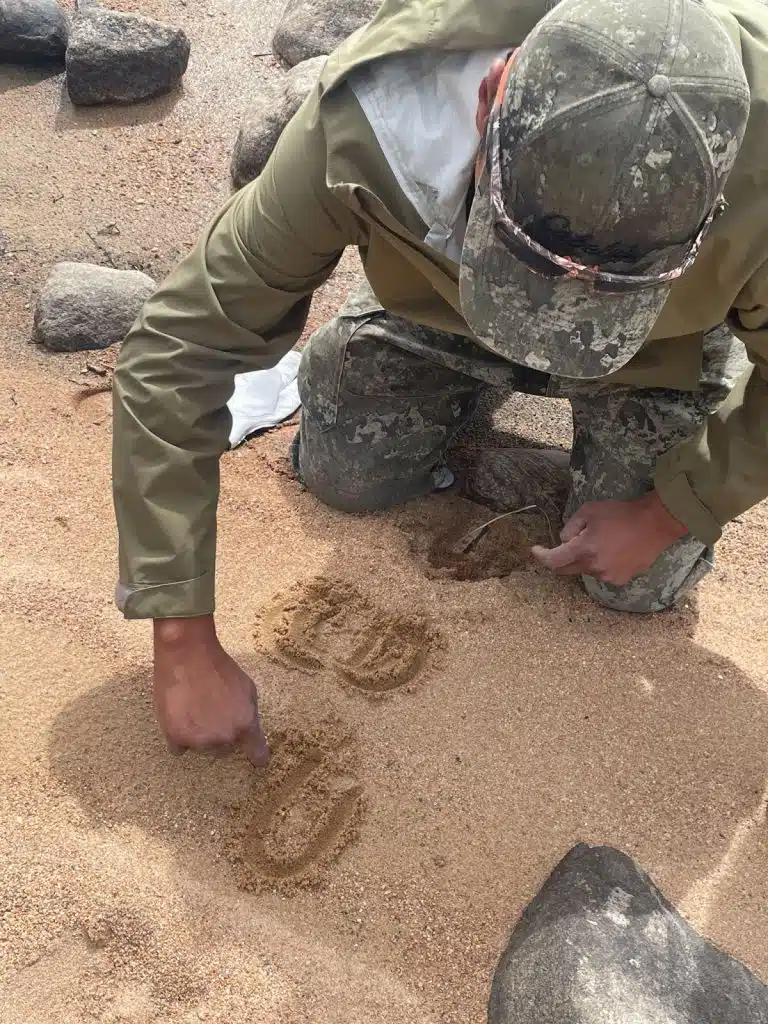
We started off the day discussing safety and the importance of taking notice of the land around us. Parks Canada Biologist, Russell Turner, helped attune our senses to signs of wildlife in the area. Taylor Galvin, Anishinaabe-Kwe scientist and master’s student at the University of Manitoba, eloquently braided Western and Traditional Knowledge throughout the walk. After responsibly harvesting willow, we gathered to sew caribou hide rattles with Nancy, a community Elder. Stephanie Thorassie, the leader of the Seal River Watershed Alliance, was smiling ear to ear as she spent time scraping a caribou hide.
Day 2 – Living in Harmony with the Land
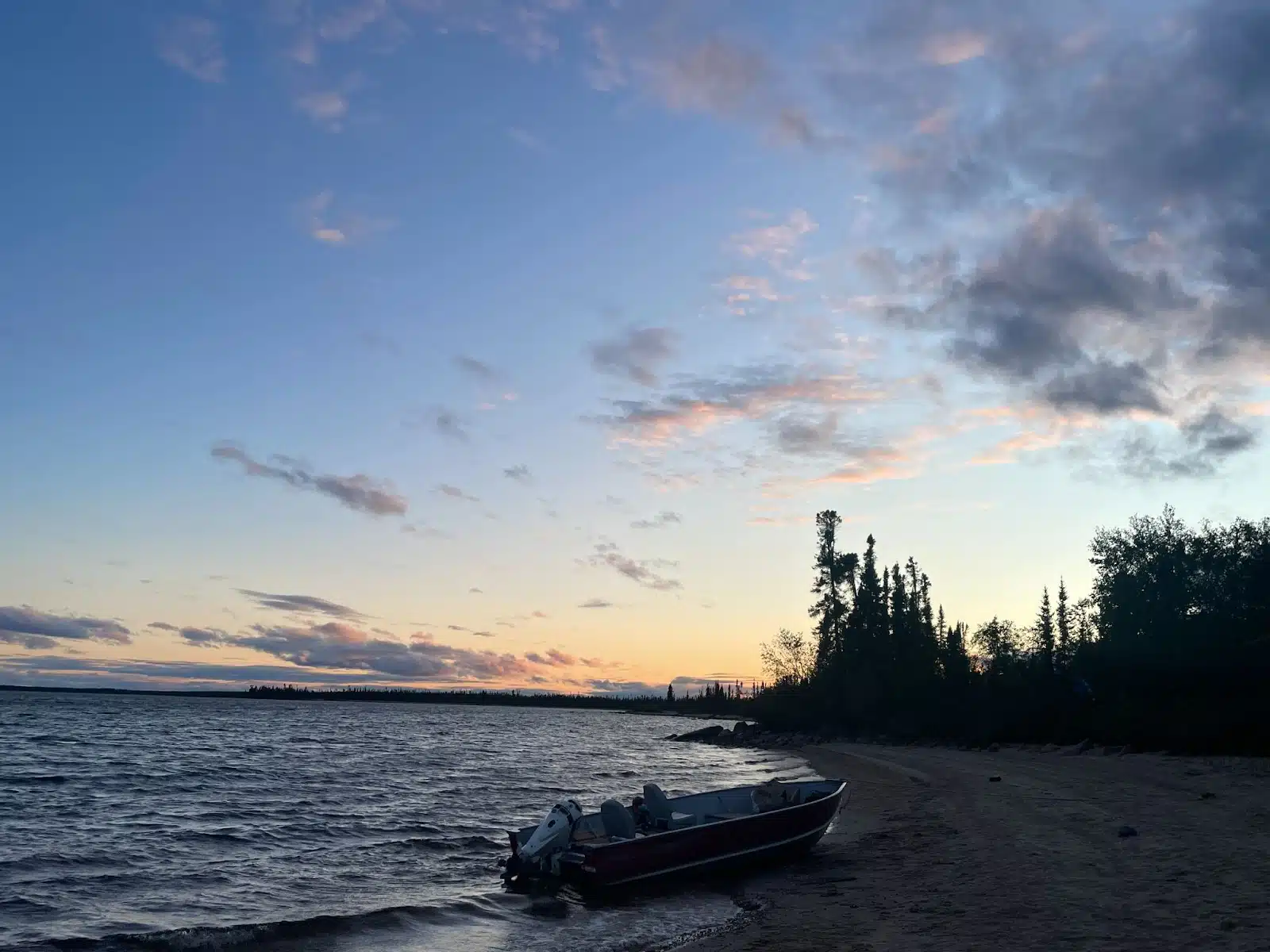
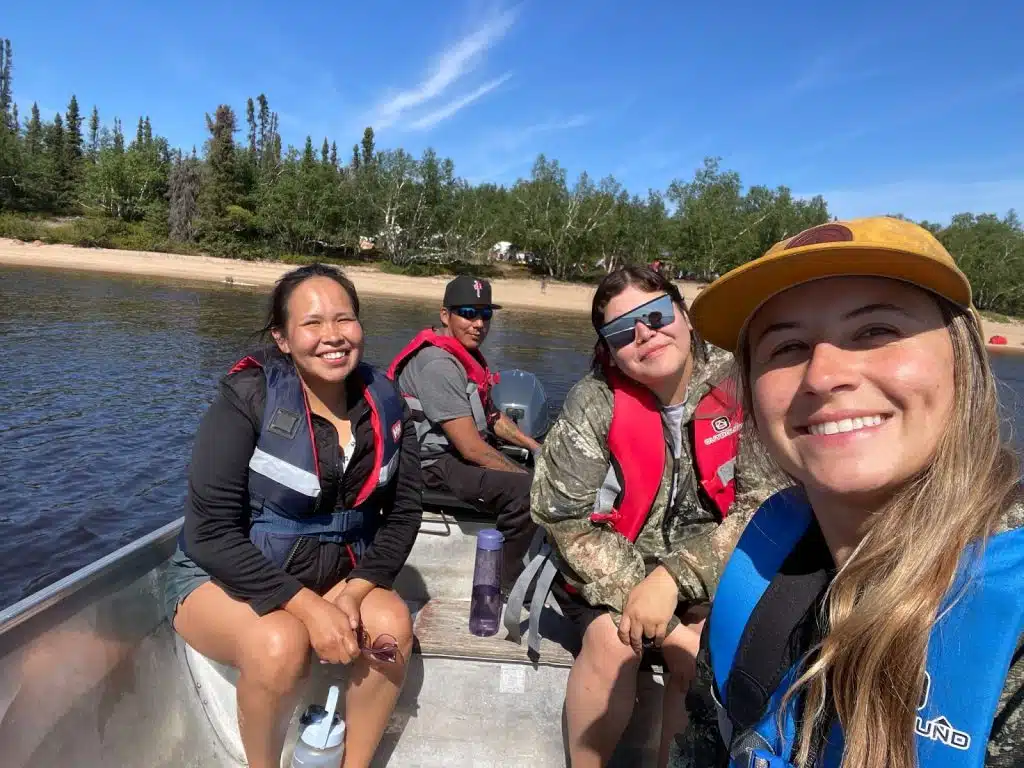
After a delicious breakfast, our day began by learning how to set fishing nets. Taught with an emphasis on language learning, each part of the net was shared in English, Dene, Cree and Anishinaabemowin. Myron Cook shared trips for preparing nets, and we headed out in the boats to learn how to set one. Being out on the boat that day was one of my favourite moments of the whole trip. The Seal River Watershed Alliance team and I were lucky enough to get Johnny, the project’s Elder, in our boat. His stories were engaging and humorous, making them memorable and entertaining. That afternoon, I finally got to clean my first fish. It amazed me how many different techniques there were to clean the same fish species. Others shared their techniques while I did my best to make sure there were no bones in my fillets! We finished the evening off watching Dene Handgame, a traditional game that Dene peoples have played for centuries. Many youth got to play for the first time, and it was incredible to watch traditions be passed on with pride and excitement.
Day 3 – Braiding Traditional and Western Knowledge
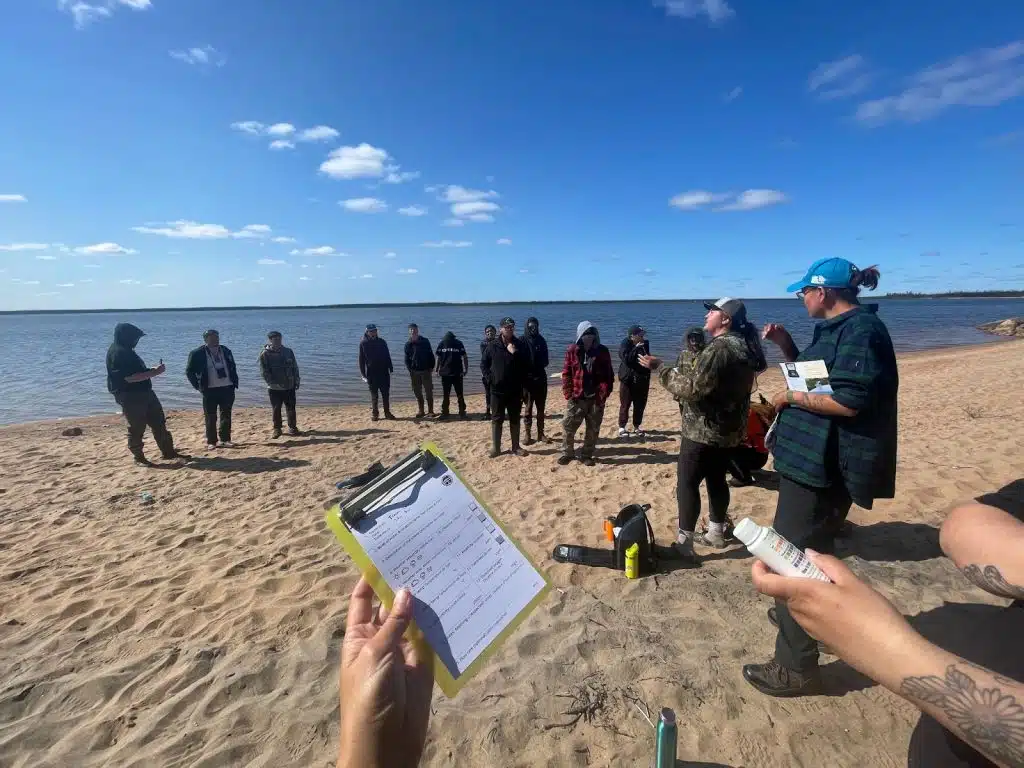
We started our day by the water. Taylor Gavin introduced the water testing kit that each of the communities would receive to test water samples from various locations. We had been drinking the water all week, but these tests confirmed what the community has long been aware of – Tadoule Lake is pristine and clear. With no development anywhere in the watershed, this water and landscape are healthy. We set out in the boats again, each driven by a community member who had a wealth of knowledge on the water, where we visited an old burn site. We talked a lot about fire, the impacts, how it moves through the landscape, and its natural presence in the ecosystem. Taylor shared medicine teachings with us alongside her story, connecting to the youth in a way that only Aunty Taylor can! She inspired many of us to build on our relationship with medicines and showed us how to respectfully engage with the land.
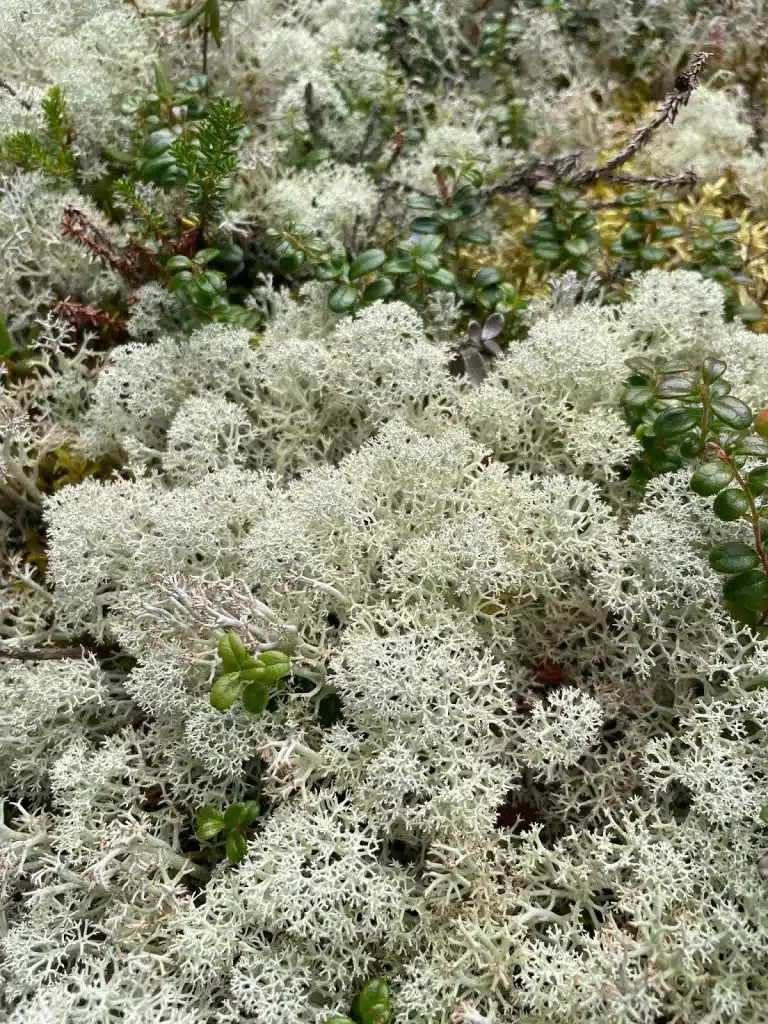
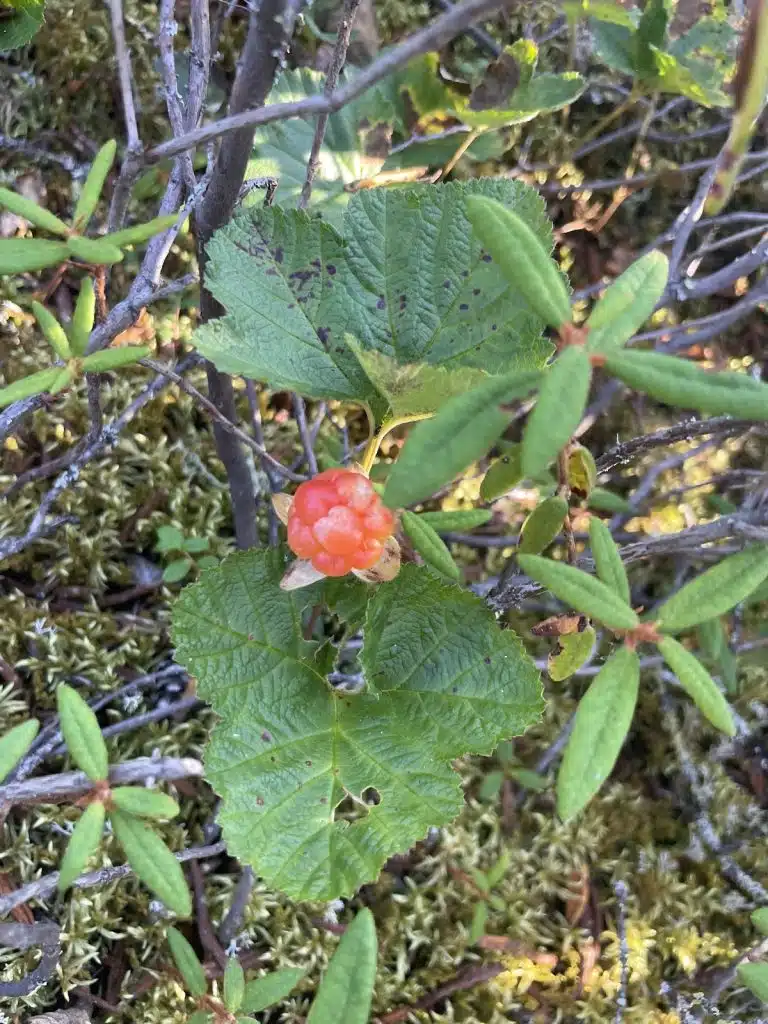
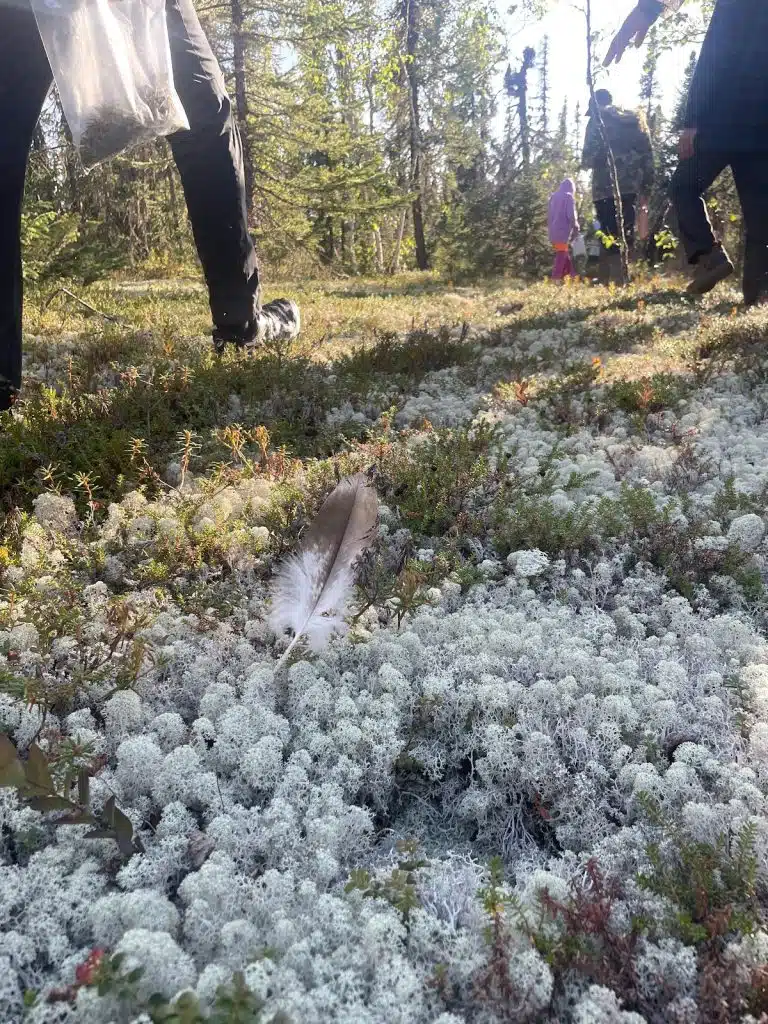
Our day finished off with one of the most memorable experiences. Johnny walked us through time as he shared stories of his years at Summer Camp. He could still hear the drums as we visited all the places his memories guided us through the bush. We walked for two hours, harvesting medicine, and following tracks left by moose and caribou. As we took time to look at our surroundings, Taylor offered many teachings and authentically interpreted the land she was on as she led us through a lichen-lined forest. No worries if you were a bit behind; she was easy to find as her laughter carried throughout the bush.
Why is Land-based Education important?
Authentic learning experiences are at the core of land-based education. The teachings shared with us were guided by our surroundings. We learnt about moose tracking, respectful harvesting practices when we went out to harvest willow and spruce, and about traditional medicines and stories of the land as we walked the very steps that Johnny’s ancestors and friends did.
The Seal River Watershed Alliance is more than a group protecting land. They are revitalizing traditional education through their Land Guardianship Program. They’re bringing cultural teachings to the forefront, rooted in experience and guided by Elders and Knowledge Keepers.
A key part of this work is the involvement of youth. Their voices matter — it is, after all, their future. But just as important, is creating opportunities for them to connect with Elders. The opportunity to walk beside Land Guardians, and to learn by doing. This is how young people grow into stewards — not just of the land, but of knowledge, language, and tradition. The Alliance is investing in their youth and in cultural education.
Land-based education is cultural education. It’s experiential, rooted in respect, and often sacred. This is an ancestral way — education through land, through story, through relationship. It has been practiced since time immemorial.
Many of the lessons shared by Elders and Knowledge Keepers — reflections of the deep relationships they hold with the land — are not mine to share. Some teachings are sacred, and the beauty of land-based education is that so much of it can’t be separated from the experience itself. That experience is the lesson.
Thank you
Through this journey, I was reminded of how deeply First Nations People are woven into the Land — how stories, interbeing, and intergenerational learning converge. I was also reminded of the connection that many have lost, disconnection from the very place that sustains us.
This is one of the many reasons Indigenous Protected and Conserved Areas are important. Protecting the land is part of a cultural and ancestral relationship with it.
Masi cho and miigwetch to those who shared knowledge. The Sayisi Dene Community and Youth along with Taylor Galvin, Myron Cook, Johnny Clipping and Nancy Powderhorn. Masi cho to Stephanie Thorassie and the Seal River Watershed Alliance— for welcoming me on to your land and into your community. Thank you for enriching my heart with traditional knowledge that will stay with me always.
Help Protect the Seal River Watershed
The Seal River Watershed is one of the last great intact natural places left in the world. It’s home to vibrant cultures and thriving wildlife, and it’s free from industrial development. Four First Nations are leading the effort to protect the entire watershed as an Indigenous Protected Areas. We’re closer than ever, but we need to keep the momentum going, take action now.
Learn More:
Click here to take action to protect the seal river watershed
Learn more about the Seal River Watershed Alliance
Read more IPCAs and protected areas
Watch the documentary, “We are made from the land.”
Check out their facebook page to see more pictures and videos.