


Manitoba Budget Falls Short on Climate and Nature
We’ve taken a close look at Manitoba’s 2026 budget, and our conclusion is clear: it does not deliver the level of investment needed to address the climate crisis or protect nature.
Earlier this year, a coalition of over 25 organisations, including CPAWS Manitoba, published a letter, calling on the provincial government to make strategic investments in three priority areas to reduce emissions and protect a healthy environment. These included:
1. Increased investment in energy efficiency, to reduce energy use, lower household bills, and create thousands of green jobs.
2. Investment in transit and low-carbon transportation, to improve affordability, mobility, and health.
3. Investment in initiatives to protect 30% of lands and waters by 2030, in partnership with Indigenous communities to slow climate change and secure ecosystems for people and wildlife.
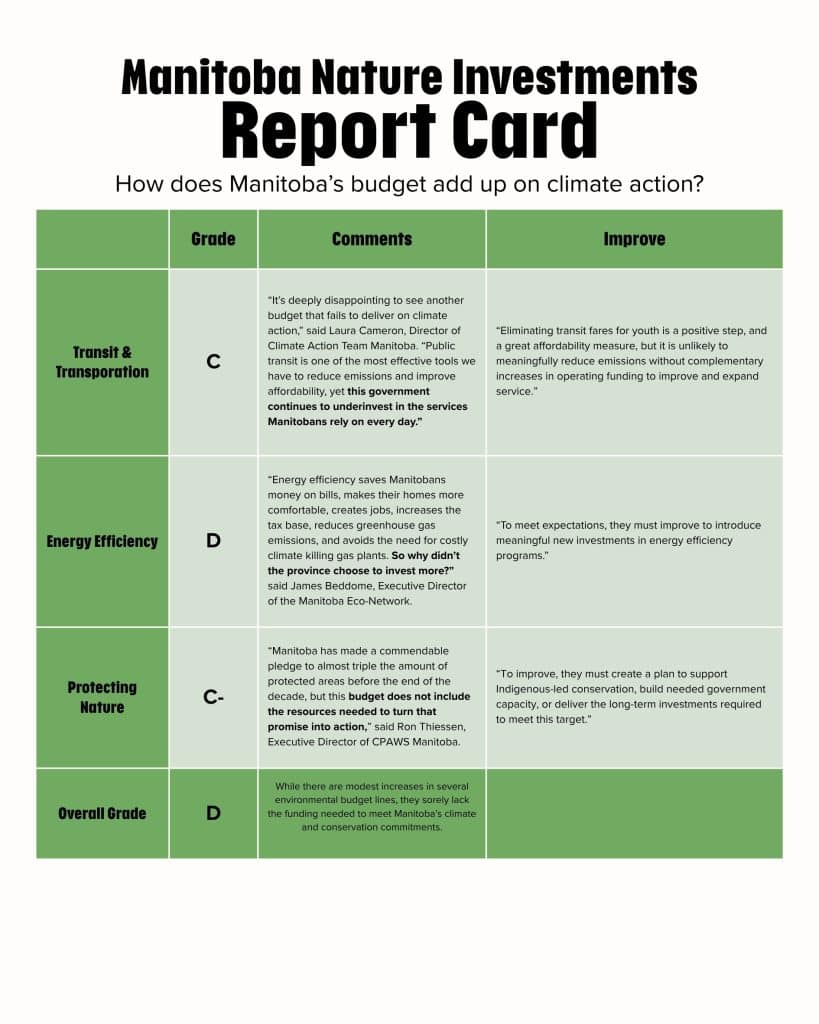
This week the 2026 provincial budget was released, and if we were a teacher grading it like a report card, we would give it a D grade.

The Grades
There are increases in some environmental spending areas, but it falls far short of what’s needed to meet Manitoba’s climate and conservation goals, therefore giving it an overall D grade.
Energy Efficiency: D
The budget doesn’t introduce any significant new funding for energy efficiency programs.
While it does mention $10 million for the Affordable Home Energy Program, that money comes from Efficiency Manitoba’s existing budget—meaning no real expansion or increased access.
“Energy efficiency helps affordability — it saves Manitobans money on bills, makes their homes more comfortable, creates jobs, increases the tax base, reduces greenhouse gas emissions, and avoids the need for costly climate killing gas plants. So why didn’t the province choose to invest more?” said James Beddome, Executive Director of the Manitoba Eco-Network.
Transit & Transportation: C
The budget fails to deliver new, sustained investments in public transit or commitments to improve service. Without increased operational funding, Manitobans will continue to face barriers to affordable, low-carbon transportation options. Eliminating transit fares for youth is a positive step, and a great affordability measure, but it is unlikely to meaningfully reduce emissions without complementary increases in operating funding to improve and expand service.
“Public transit is one of the most effective tools we have to reduce emissions and improve affordability, yet the government continues to underinvest in the services Manitobans rely on every day,” said Laura Cameron, Director of Climate Action Team Manitoba. “We urgently need to see 50-50 transit operating funding fully restored and expanded to fill this gap and revive struggling transit systems.”
Nature Protection: C-
In 2023, Manitoba made the commitment to protect 30% of its lands and waters by 2030, but with that deadline being 4 years away, this budget doesn’t provide the funding needed to get there.
There’s no clear plan for: supporting Indigenous-led conservation, expanding government capacity, and delivering long-term investments.
“Manitoba has made a commendable pledge to almost triple the amount of protected areas before the end of the decade, but this budget does not include the resources needed to turn that promise into action. Conserving our natural lands and waters is vital to help combat climate change, halt wildlife decline, and support a sustainable economy,” said Thiessen. “We do, however, recognize and appreciate the province’s collaborative efforts toward protecting the Seal River Watershed and a marine conservation area in Hudson Bay.”

What Does This Mean?
Climate change is already hitting Manitobans hard, through summer wildfires, drought, and extreme temperatures. Without stronger government investments, those costs will only grow and be passed on to future generations.
“The choice to double down on balancing the budget while further cutting taxes is pushing greater climate costs and devastation onto the next generation, while missing myriad opportunities to grow low-carbon industries and jobs,” said Cameron. “A climate plan without investment is simply a wish list. We need to move from pledges to action backed by investment, accountability, and long-term science-based strategies.”
What Happens Next?
We are calling on the provincial government to revisit its investment strategy and work collaboratively with communities, Indigenous Nations, and stakeholders to deliver significant investments in 2026 that advance its climate and nature commitments.
This blog is a version of a media release, published with the coalition, including: Canadian Centre for Policy Alternatives – Manitoba, Climate Action Team Manitoba, Climate Reality Project Canada, CPAWS Manitoba, Manitoba Eco-Network, Manitoba Energy Justice Coalition, Manitoba Public Health Association, Sustainable Brandon, and Wilderness Committee Manitoba.
Learn More:
Read the full Manitoba budget 2026