


Branching Into Tree Identification
By Brendan Labarre, Social Media Assistant.
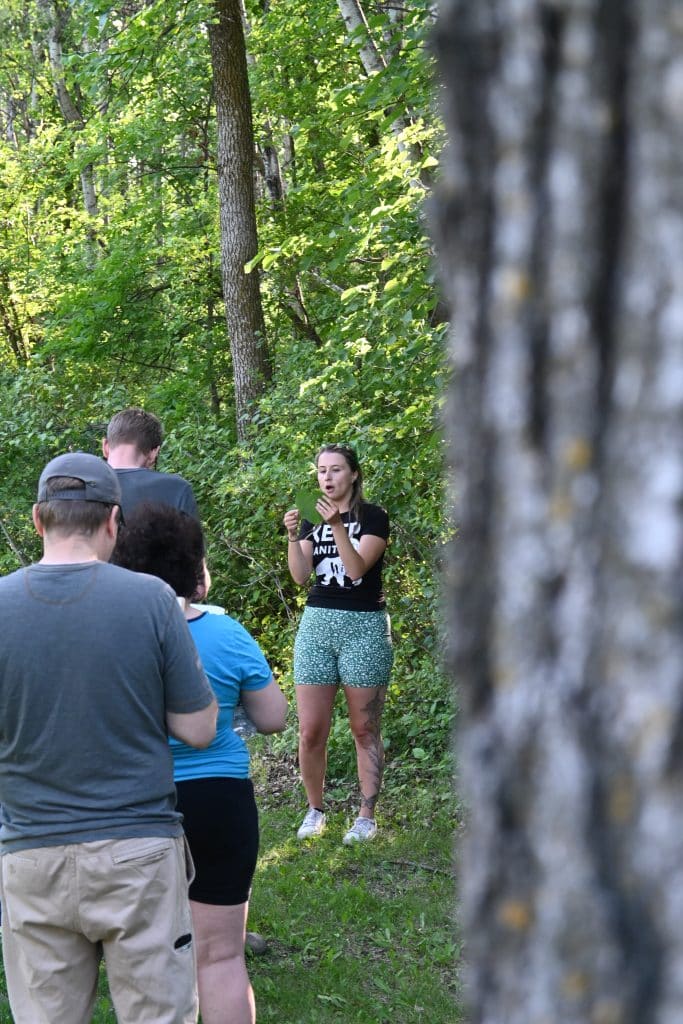
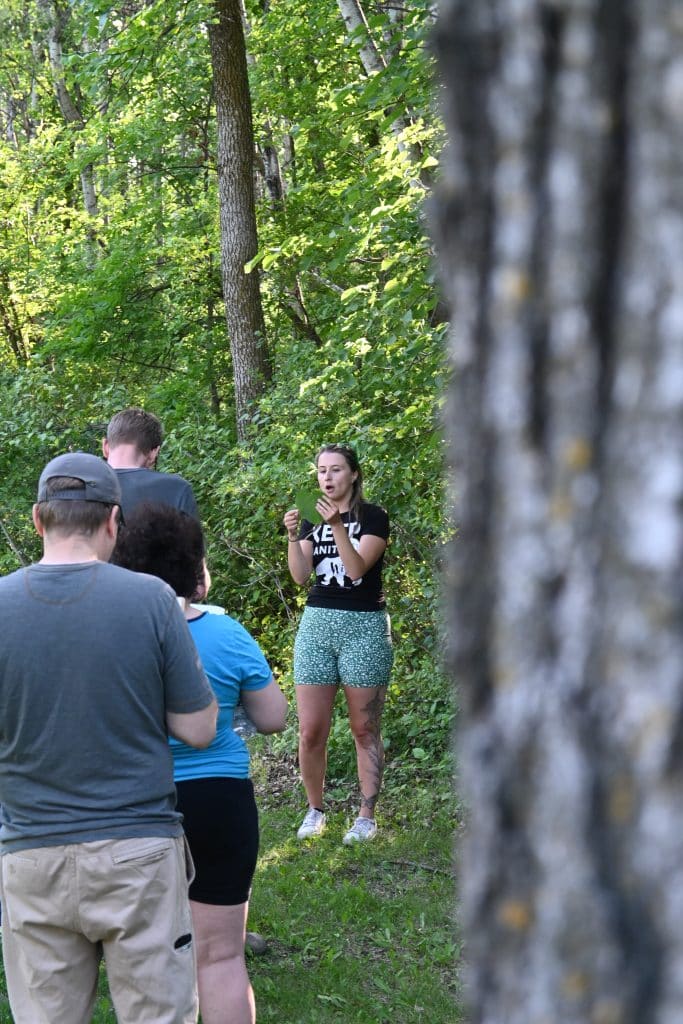
At CPAWS Manitoba we get it — trees can be hard to identify. We’ve seen people come to our workshops, we’ve heard you ask for more, and we’re delivering the ultimate tree identification guide for you to enjoy.
Common Terms You’ll Want to Know:
Before we start helping you identify trees, we must go over some terms. Or as we like to say, tree-minology.
Deciduous and Coniferous Trees.
Trees can be split into two main types: deciduous and coniferous trees.
You can tell these types by the leaves they have, deciduous trees will grow flat leaves while coniferous trees have needles. Some common types of deciduous trees are aspen, oak, and elm. Coniferous trees include pine spruce and cedar.
Knowing the difference will help you identify a trees in front of you. The next step is to identify the characteristics of it’s leaves. Here’s some other terms you should know to do so.
Types of Leaves
Simple Leaf: Each leaf has 1 stem that attaches directly to the branch.

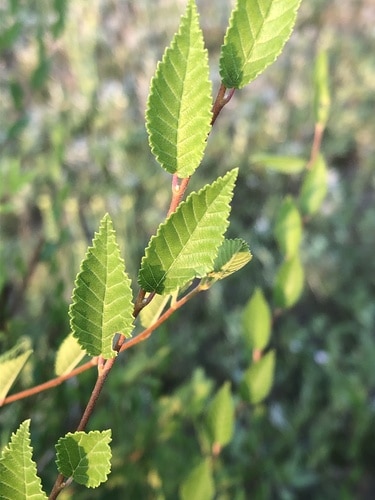
Compound Leaf: When multiple leaves come out of a single stem.
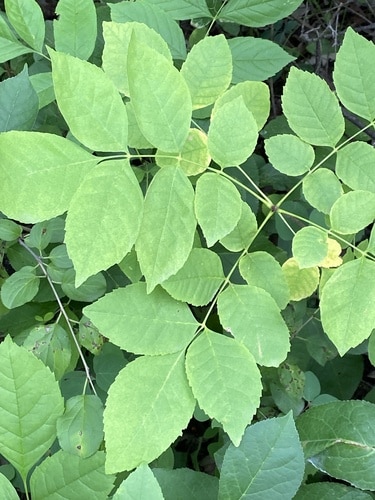
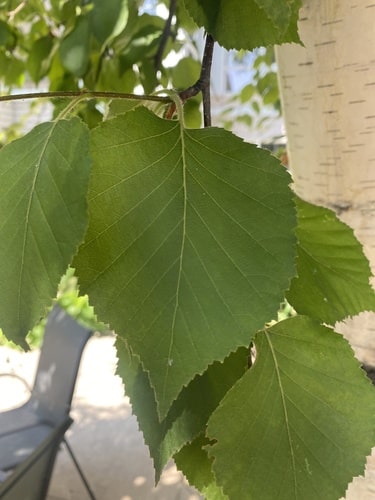
Single Toothed Leaf: There are jagged teeth along the outside of the leaf.
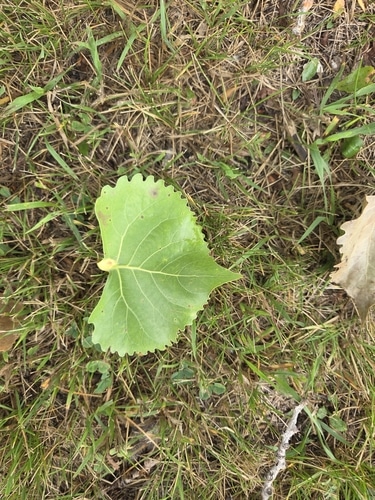
Double Toothed Leaf: Similar to single toothed but will have 1 large tooth partnered with 1 small tooth.
How to use a Tree Identification Guide

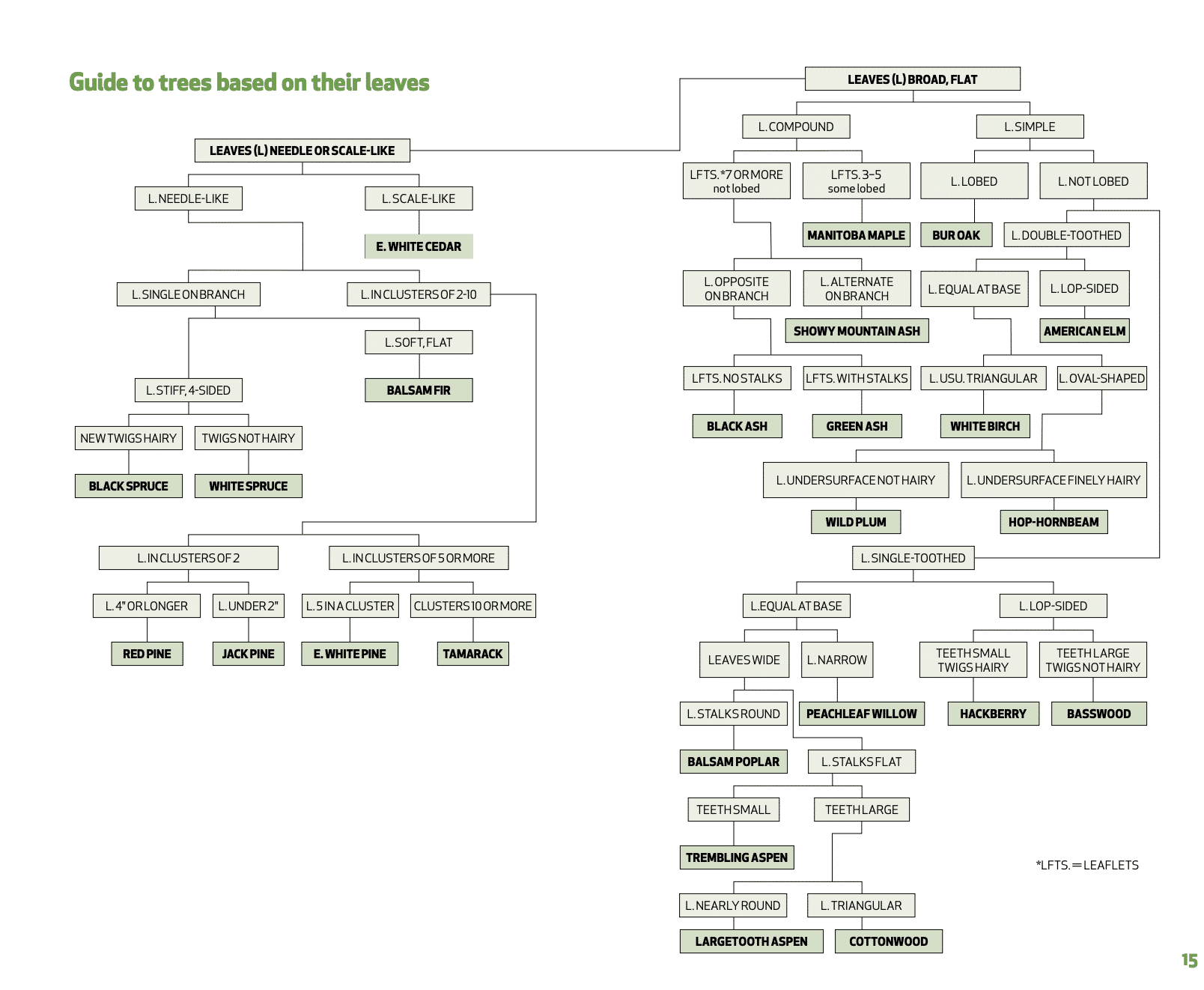
The easiest way to identify a Manitoban tree is to use the Government of Manitoba’s Field Guide. The guide will help you identify any tree you see in Manitoba by using the terminology used above. Once you have the guide, here’s how you can use it:
- Find an area with a lot of trees. You’re the one reading a tree identification guide, don’t kid yourself by thinking you’ll be satisfied with one tree. Check out our trail guide for some great places to visit.
- Get up close to the tree to see its branches and leaves. Trees are most easily identifiable by their leafs, such as spruce trees having stiff four sided needles. “How do I know if the tree’s branches have stiff four sided needles?” you might be asking. You need to get close.
- Use the flowchart in the Government of Manitoba’s Field Guide to identify the tree. The guide will ask you questions like if the leaves are simple or compound and has references for those terms.
- We recommend checking your work just to make sure you got it right. You can use the Seek app to double check the tree’s species. If you don’t have service, you can also use a picture of the tree to identify it later.
How to Identify Poison Ivy
While we’re identifying plants, let’s discuss how to identify poison ivy for stress-free tree identification.
Poison ivy is common in Manitoba. It’s a plant that is usually less than 30 cm tall and just like trees, the secret to identifying it is found by looking at the leaves.

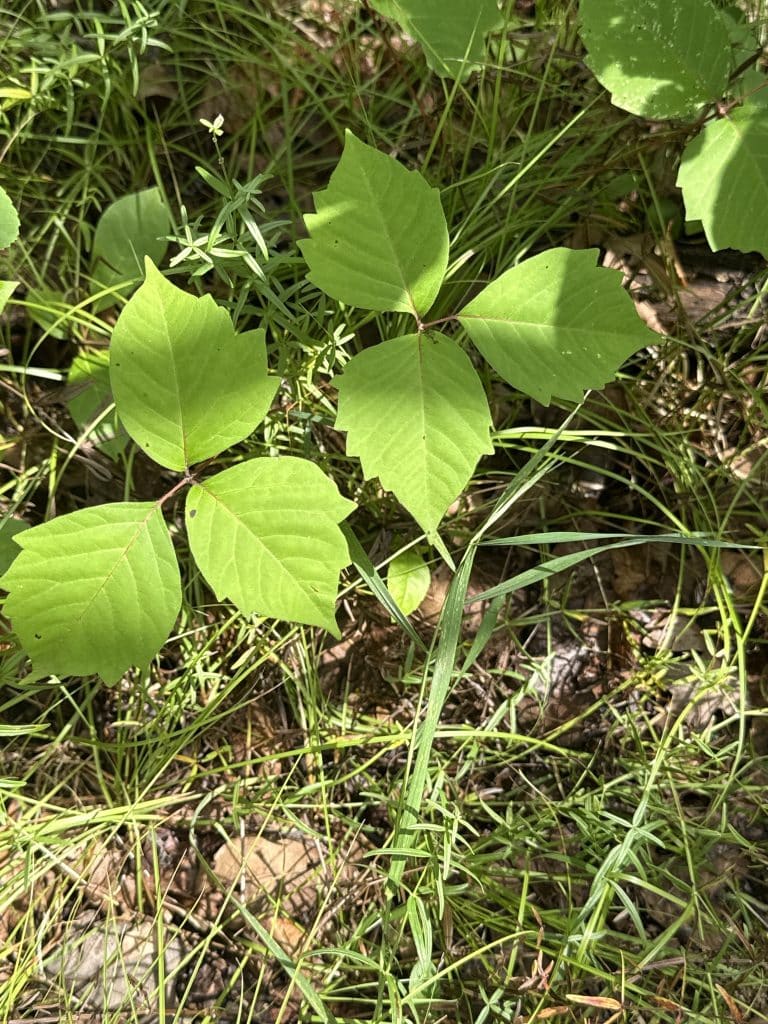
Poison ivy can come in many shapes, sizes, or colours. The leaves may be red or green, their leaves can have teeth or be smooth, but are always identifiable by having three leaves with one being higher than the others. Poison ivy can also have small white berries which are a sign of the plant.
Around 85% of people are affected by poison ivy and the oil that causes the rash can linger on objects like pet fur, clothing, or gardening tools for a significant amount of time. Exposure to poison ivy can result in itching, blisters, and sometimes oozing sores. If you think you’ve come in contact with poison ivy, wash the area with cold water and soap.
Remember, “Leave’s of three, let it be.”