


Environmental, Labour, Health, & Community Organizations Call for Climate Investments in Manitoba Budget 2026
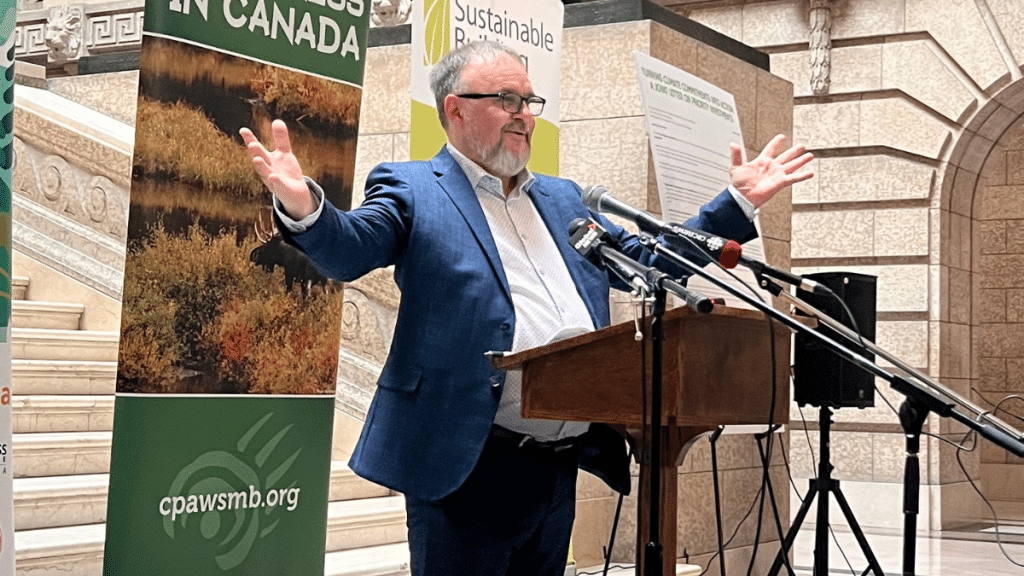
January 29, 2025, Winnipeg, MB, Treaty 1 Territory – Twenty-six Manitoba civil society organizations have published a joint letter to the provincial government voicing the urgent need for increased climate investments in Budget 2026. Members of the signatory organizations gathered at the Legislative building this morning to outline their shared priorities, before delivering the letter to the Minister of Finance.
The organizations – representing thousands of workers, businesses, and community members – are calling for investment in three key areas to reduce emissions and protect a healthy environment. These include:
1. Increased investment in energy efficiency, to reduce energy use, lower household bills, and create thousands of green jobs.
2. Investment in transit and low-carbon transportation, to improve affordability, mobility, and health.
3. Investment in initiatives to protect 30% of lands and waters by 2030, in partnership with Indigenous communities to slow climate change and secure ecosystems for people and wildlife.
While the province published Manitoba’s Path to Net-Zero last fall, there has not been sufficient investment to back up its ambition. Since taking office, this government has funded only $73 million in emissions reduction measures, compared to $340 million spent on the gas tax holiday and roughly $1.15 billion on highway construction in 2024 and 2025.
“Climate change is already cutting into Manitoba’s bottomline, with hundreds of millions in costs from last year’s devastating fires and drought. It is past time that the Province meaningfully invest to move Manitoba off of fossil fuels and proactively prepare for the impacts to come,” said Laura Cameron, Director of Climate Action Team Manitoba. “We cannot afford to balance today’s budget while offloading costs and irreparable losses onto the next generation.”
The three recommendations above align with commitments listed in the provincial government’s climate strategy. These investments would also have myriad co-benefits for Manitoban households and businesses, including improving health, affordability, access to employment, and local economic development.
“Public transit is one of the most effective climate tools we have. It reduces our reliance on cars, cuts emissions, and keeps our communities moving,” stated James Van Gerwen, President, ATU Local 1505. “This is a critical moment for the province to step up with real, sustained operational investment. Doing so strengthens climate action while supporting the frontline workers who keep our communities going every day.”
“Manitoba has committed to protecting 30% of the province’s lands and waters, and that commitment must be backed by real investment that matches the scale of the task ,” said Ron Thiessen, Executive Director of CPAWS Manitoba. “Protecting nature fights climate change, safeguards biodiversity, and supports Indigenous-led solutions that benefit all Manitobans. We need practical, long-term investments that reduce future costs while protecting what makes our province unique.”
The letter signatories include: Climate Action Team Manitoba; Amalgamated Transit Union Local 1505; Manitoba Public Health Association; Manitoba Eco-Network; Sustainable Brandon; CPAWS Manitoba; Canadian Centre for Policy Alternatives Manitoba; Clayton Thomas-Mueller, Author, Artist & Advocate; Climate Reality Project Canada; Prairie Climate Centre; Fireweed Food Co-op; Seniors4climate MB; Good Nature Veterinary Outreach; Contemplative Manitoba; Canadian Association of Physicians for the Environment Manitoba Chapter; Green Economy Canada; Bike Winnipeg; Save Our Seine River Environment Inc.; Manitoba Energy Justice Coalition; Green Action Centre; Trees Please Winnipeg Coalition; Climate Change Connection; BizforClimate; Wilderness Committee Manitoba; Sustainable Building Manitoba; and Manitoba Council for International Cooperation.
“Many people now suffer health setbacks from floods, wildfire smoke, climate change anxiety and other harms. Some are seriously affected,” said Ann Loewen, physician and volunteer with CAPE Manitoba. “It is imperative to recognize that decades of fossil-fuel driven climate change, neglect of air, forest and water stewardship, and widespread environmental degradation now result in negative and costly personal and population health impacts. Manitoba must take definitive steps and investments to change course so that our land, water and air allow all who live here to thrive.”
-30-
Download the PDF of the media release here. Download of the join letter sent to the finance minister here.