

Manitoba’s Pathway to Net Zero Strategy
by Ron Thiessen, Executive Director
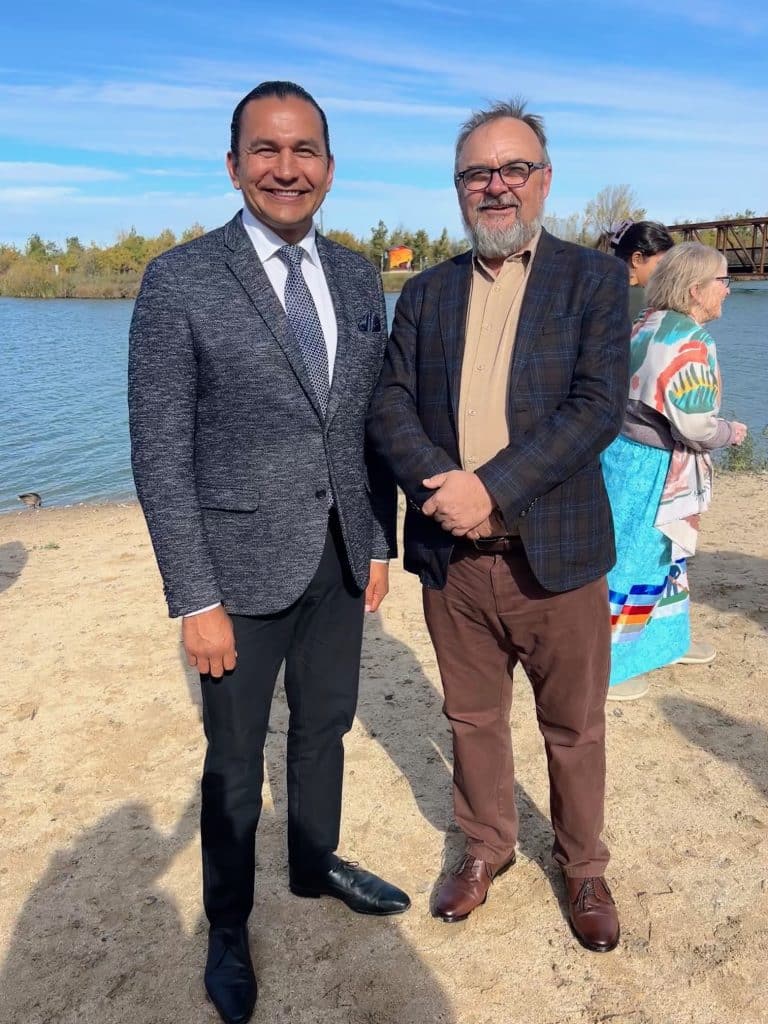
It was a crisp autumn morning at FortWhyte Alive when Premier Wab Kinew and Minister of Environment and Climate Change Mike Moyes unveiled Manitoba’s Path to Net Zero strategy. The sun was warm, the sky clear, and a cool wind rustled through the yellowing trees, the kind of setting that reminds us why protecting this province’s air, water, and land matters so deeply.
I was pleasantly surprised as this is the first time I’ve seen a provincial policy document built around Indigenous teachings, marking an important shift in how Manitoba approaches environmental policy.
“The path to net zero will be anchored by a deep respect for and responsibility to safeguard Manitoba’s environment, thinking ahead seven generations into the future. Reaching Manitoba’s climate and economic goals must be done without compromising the protection of the air, land and waters.”
Path to Net Zero
As Minister Moyes said, “Protecting our environment is not just about reducing emissions, it’s about preserving the land, air, and water that sustain us.”
That connection between reducing emissions and protecting nature is at the heart of what it means to build a resilient and low-carbon future. It was encouraging to see Ministers Ian Bushie and Lisa Naylor, and MLA Mike Moroz also in attendance, reflecting that this work crosses departments and communities.


Nature: Our Best Ally in the Fight Against Climate Change
Manitoba’s new strategy recognizes that we cannot tackle climate change without protecting our forests, wetlands, grasslands, and peatlands. They are natural carbon sinks, absorbing and storing greenhouse gases while regulating floods, filtering water, and providing habitat for wildlife.
It is encouraging to see the province commit to offsetting emissions by protecting these ecosystems and to work with the federal government on a feasibility study for a National Marine Conservation Area in western Hudson Bay. This could be a historic opportunity to balance economic development at the Port of Churchill with strong protection for nature, culture, and all local livelihoods.
“This is the fundamental idea behind this plan… everything we do is going to have an impact, so along with planning the economic project, let’s also plan for the environmental offset.”
Preimer Kinew
With the enhancement of the port and shipping increases, we need to ensure that we also protect the belugas, the polar bears, the birds, and the local communities and cultures that rely on them.
Manitoba has laid out a vision that connects climate and nature, now it must show how those commitments will be implemented on the ground.
From Pledges to Progress
The Manitoba government’s commitment to protect 30 per cent of our province’s lands and waters by 2030, known as 30×30, is one of the most powerful climate solutions available to us. Right now, only 11.1 per cent of Manitoba is protected as natural spaces. Closing that gap will require strong leadership, investment, and collaboration.
Through our public outreach efforts, we’ve heard from more than 27,000 Manitobans who have called on Manitoba to produce an Action Plan for Nature. Their message is clear: Manitobans want bold action to protect our lands and waters. Establishing protected areas takes time, and consultation, research, planning, and partnership-building do not happen overnight. That is why it is critical that the province release the action plan as soon as possible, so we have time to meet the 2030 target.
Call on Manitoba to produce an action plan for nature, sign now!
To achieve these commitments, Manitoba’s Path to Net Zero must be paired with sustained and sufficient funding. Protecting and restoring nature is not a cost , it’s an investment in clean water, climate resilience, and the health of future generations. Budget 2026 is an opportunity to match the level of investment with the scale of the task, supporting conservation, new protected areas, and Indigenous-led stewardship.
This is about more than hitting a number. Protecting 30 per cent of Manitoba will safeguard vital carbon stores, keep our water clean, and preserve wildlife habitat from the Seal River Watershed to the Interlake’s Conservation Areas Initiative along with the 153 Areas of Special Interest that have waited years to be considered for protection. The commitment is there. Now we need the resources and the roadmap to make it real.
We know that nature-based solutions are among the most cost-effective tools for tackling emissions and protecting communities. Every dollar spent conserving wetlands and forests, pays back many times over through cleaner water, reduced flooding, food security, and climate mitigation.

A Shared Path Forward
The Path to Net Zero sets a strong direction for Manitoba, one that aligns our environmental, economic, and social goals. The next step is to translate that vision into action plans that lead to tangible progress.
It was impossible not to feel hopeful standing at FortWhyte Alive, surrounded by Manitobans who care deeply about the future of this province. The sun on our faces that day was a reminder of what we are working to protect: a thriving Manitoba where nature and people can flourish together.
Now comes the hard work, turning this vision into action. Manitoba has a chance to show real leadership by ensuring that nature remains at the centre of our path to net zero, for our communities, our economy, and the generations yet to come.
Learn More & Take Action for Nature
Want to dive deeper into how we can protect Manitoba’s lands and waters? Explore our position on 30×30, what we believe the Action Plan for Nature must include, and the steps you can take, from signing postcards to writing your MLA to help ensure Manitoba turns promises into protection.
This blog was made possible through the generous support of the National Audubon Society. We’re grateful for their partnership, collaboration, and shared commitment to protecting the lands, waters, and wildlife we all cherish.