

Paddleboarding in Churchill
For many Manitobans, a trip to Churchill, Manitoba is the stuff of dreams — paddleboarding beside belugas, spotting polar bears, and experiencing the magic of the North. Very few get that chance — but our own Carly did. Her journey prompted an important question: how will tourism and conservation shape Churchill’s future?
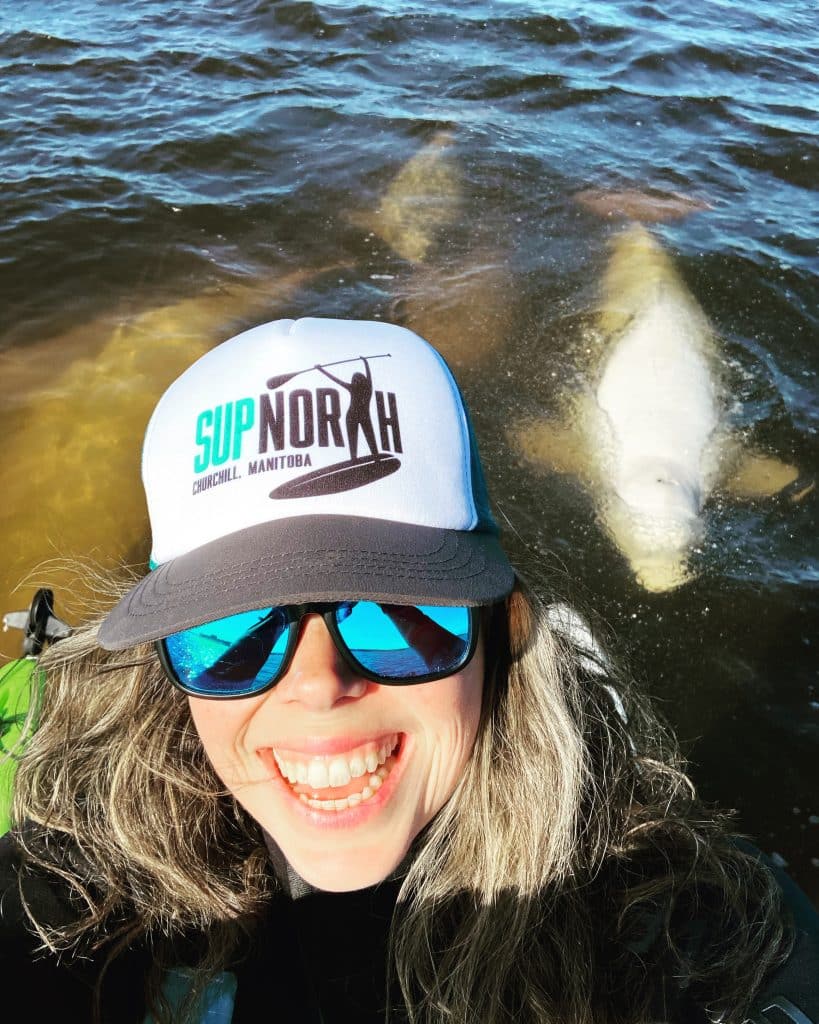
Carly’s favourite moment? Gliding on her board alongside belugas. “Erin Greene from SUP North was incredible,” she told us. “Not only did she teach us how to respectfully engage with the belugas, she actually sang to them while we paddled. You could see how the whales loved her voice and presence.”
To explore this further, we sat down with Erin — owner and operator of SUP North — to hear her perspective.

Q&A
Tourism:
CPAWS: “A lot of people dream of coming to Churchill to see polar bears or paddle with belugas. From your perspective, how does tourism help protect these animals and their habitat?”
Erin: “We protect what we love. Once you experience what it is like when a beluga whale curiously looks up towards you on your paddleboard, you realize there is nothing else comparable. It awakens a deep connection to these extraordinary beings. They are playful, gentle and trusting of the relationships built on the Churchill River. They bring an incredible amount of joy to everyone they meet and people instantly fall in love with them and when you care about the whales, you begin to care about protecting their habitat as well.”
CPAWS: “On the flip side, are there challenges with having more visitors in such a sensitive environment?”
Erin: “Currently the belugas can choose to come up to our guests or choose to swim towards a less occupied area of the Churchill River. With too much growth in summer tourism, it may be hard for that to remain a choice for them. As a small business owner, of course I would like to see growth in my company, but not at the cost of the mental/physical health of the belugas. I think there is a fine line between growth and potential harm. There is a balance that needs to be maintained.”
Wildlife:
CPAWS: “What steps do you take on your tours to make sure the wildlife isn’t disturbed?”
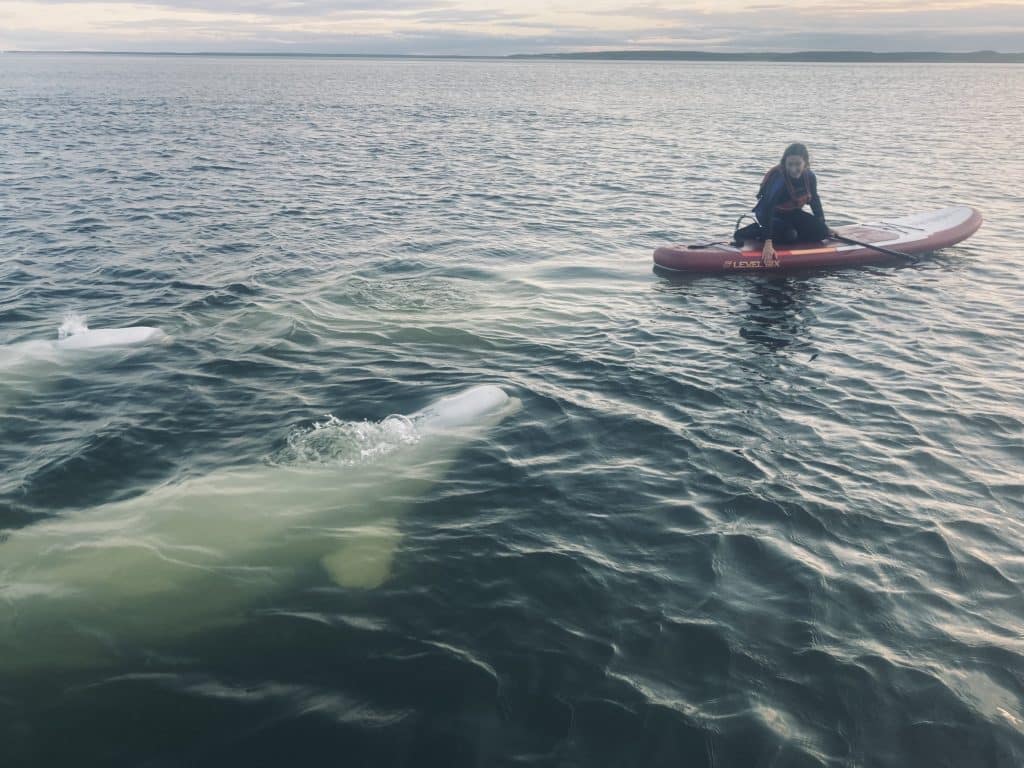
Erin: “I always give a safety talk to my guests prior to going out on the water. I let folks know that we are entering into the home of the beluga whale. It is where they eat, sleep, give birth, socialize and play. It is an honour to share space with them and we always treat them with the utmost respect. We never chase whales–we allow them to approach us, also never touch the whales–this keeps both humans and belugas physically safe from bacteria/parasites that can potentially transfer between us. We have a healthy, numerous population of whales here and we want that to remain for generations to come so that they too can know what it is like to be in the company of whales.”
CPAWS: “Have you noticed any changes in the animals or the landscape over the years, either from tourism or from climate change?”
Erin: “The summer tourism season has had small growth but not enough to really see any negative impact. I have taken meticulous notes after every tour with regards to weather and beluga behaviour, and I have noticed in the last 10 years that more of my tours have been cancelled due to wind.”

Climate Change:
CPAWS: “Do you find visitors leave with a better understanding of the impacts of climate change up here?”
Erin: “I think visitors develop an understanding of how delicate the balance in the environment is and how small changes can have a big impact. By bridging the gap between species, people start to recognize how closely connected we are. Species in the arctic are more at risk. I speak to my guests about the effects that shipping and the resulting noise pollution has on the beluga whale population and their social networks. They see their world through sound. For example, noise pollution interferes with critical communication between moms and calves as calves lack the muscular capacity to make loud calls. We also discuss how integral a part sea ice plays in the Arctic ecosystem. Everything is interconnected with the sea ice; it supports the entire Arctic food chain. What affects the animals and the land inherently will affect us.”
Community:
CPAWS: “When you think about the future of Churchill, what kind of tourism model do you hope to see?”
Erin: “Wildlife, cultural, adventure and eco tourism all have a future in Churchill. That being said, there is a ceiling for the growth in tourism as too much can potentially harm the specialness of this small town. Limiting the amount of tour operators can help us keep it safe and unstressful for the animals. I believe focus should be placed on local tour operators with knowledge of and respect for the land, water and wildlife. Wildlife should be given the opportunity to lead the way.”
CPAWS: “How does conservation tie into the local community — do you see it benefiting people who live here as well as the wildlife?”
Erin: “I think conservation can benefit both people who live here and the wildlife. We can find a way to work together. At the end of the day we are on the same team; we want a healthy and happy wildlife population. If the ecosystem is healthy then the people who live here can continue to do the activities they love which include being out on the land and water. Regulations can help guide folks to make smart choices when it comes to human/animal interactions and keep both animals and humans safe. Regulations can also help ensure responsible tourism.”
CPAWS: “And finally, if there’s one thing you wish every visitor would keep in mind to help protect this place, what would it be?”
Erin: “I want them to remember the connections that they made with the wildlife while visiting Churchill and keep that in their minds and in their hearts when making choices moving forward. For every action there is a reaction. Big or small, every choice that we make matters.”
Future of Hudson Bay:
Carly’s trip to Churchill was more than a northern adventure — it was a reminder of how powerful personal connections with nature can be. Through experiences like paddleboarding with belugas, visitors don’t just witness the beauty of the North; they become part of its story.
As Erin shared, mindful tourism has the power to inspire stewardship — but it also carries responsibility. Protecting Churchill’s wildlife and wild spaces means finding balance: supporting the community and economy while keeping the ecosystem healthy for generations to come.
Whether you’re lucky enough to visit or simply dreaming of the North, we all have a role to play in protecting Manitoba’s lands and waters. You can help make this vision a reality. Sign our online postcard today and join thousands of Manitobans calling for permanent protection of our ocean coast.
Learn More:
Book your own Stand Up Paddleboard tour with SUP North and Sea North Tours
Hudson Bay Marine Conserved Area
Hudson Bay is home to a third of the world’s beluga whales and is an important home for polar bears, birds and people. But climate change and industrial pressures mean that daily life is changing quickly— with melting sea ice, shorter hunting seasons for polar bears, and growing interest in Arctic shipping routes that could increase pollution and underwater noise.
But this doesn’t have to be the case. Manitoba can strengthen its economy and revitalize Churchill’s port without sacrificing its natural treasures or iconic landscapes. Establishing a National Marine Conservation Area in Hudson Bay could enhance local livelihoods, bolster the region’s tourism industry, create new jobs and bring infrastructure investments while maintaining safe, clean habitat for bears, belugas and birds. Let’s protect Canada’s great inland sea — for wildlife, people, and generations to come.